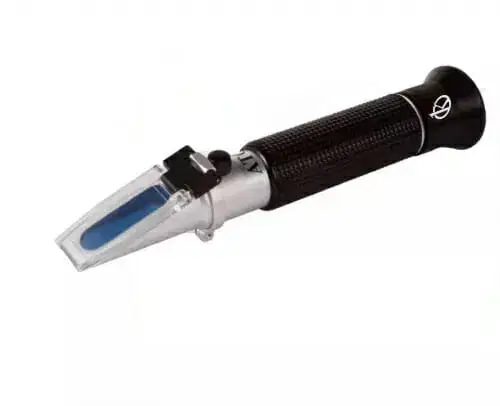
Car Refractometers: ISO/IEC Standards and Regulatory Compliance in Laboratories 2026
In the fast-evolving landscape of laboratory technology, car refractometers embody crucial tools for determining antifreeze concentrations in automotive settings. With ongoing enhancements in ISO/IEC standards, these instruments must align with regulatory compliance to ensure accurate, reliable results. This article delves into the various models of car refractometers, examining their compliance with ISO/IEC guidelines and how they facilitate laboratories in meeting these standards.
Understanding ISO/IEC Standards and Their Importance
The International Organization for Standardization (ISO) and the International Electrotechnical Commission (IEC) set rigorous standards that laboratories must adhere to in their operational protocols. Compliance with these standards not only ensures quality and reliability of test results but also enhances lab accreditation status. For car refractometers, understanding how these standards apply is vital for maintaining operational integrity.
Key ISO/IEC Standards Relevant to Car Refractometers
Several specific ISO/IEC standards are particularly relevant when using car refractometers in laboratory settings. These include:
- ISO 17025: This standard outlines the requirements for the competence of testing and calibration laboratories.
- IEC 61010: It focuses on safety requirements for electrical equipment for measurement, control, and laboratory use, impacting how refractometers should be designed and utilized.
- ISO 15189: This standard is applicable to medical laboratories, ensuring that laboratory services consistently meet quality standards.
How Car Refractometers Help Meet ISO/IEC Compliance
Each car refractometer model plays a role in enhancing compliance with these standards. For instance, the Car Refractometer YR05916 and YR05917 models are equipped with Automatic Temperature Compensation (ATC), which ensures accurate readings across variable temperature conditions, aligning with ISO 17025’s calibration requirements. Additionally, the Car Refractometer YR05918 offers features that comply with IEC 61010, enhancing user safety during operation.
Comparison of Available Models
| Model Code | Measurement Range | Minimum Division | Accuracy | ATC | Material |
|---|---|---|---|---|---|
| YR05916 | E: -60°C - 0°C | 0.01sg | ±0.01sg ±5°C | Yes | Aluminum |
| YR05917 | E: -60°C - 0°C | 0.01sg | ±0.01sg ±5°C | Yes | Aluminum |
| YR05918 | E: -60°F - 32°F | 0.01sg | ±0.01sg ±5°C | Yes | Aluminum |
| YR05919 | E: -60°C - 0°C | 0.01sg | ±0.01sg ±5°C | Yes | Aluminum |
| YR05920 | E: -60°C - 0°C | 0.01sg | ±0.01sg ±5°C | Yes | Aluminum |
| YR05921 | E: -60°C - 0°C | 0.01sg | ±0.01sg ±5°C | Yes | Aluminum |
Common Mistakes and How to Avoid Them
One common mistake in laboratory settings is neglecting the calibration of car refractometers. Regular calibration, as stipulated by ISO 17025, is necessary to maintain precision and reliability. Another mistake is ignoring temperature variations; failure to use models with ATC can lead to inaccurate readings. It is crucial for laboratories to train staff properly and establish a calibration schedule to comply with standards.
Impact of New Regulations on Car Refractometer Usage
With the constant evolution of ISO/IEC regulations, laboratories must adapt to new compliance requirements. New protocols often involve stricter calibration processes and documentation of results. Car refractometers like the YR05920 are designed with features that enhance traceability, making it easier for labs to adhere to these evolving regulations.
Best Practices for Ensuring Compliance with ISO/IEC
To ensure compliance with ISO/IEC standards, laboratories should implement best practices such as regular training of personnel, keeping calibration records, and routinely checking equipment for functionality. Additionally, integrating car refractometers with laboratory information management systems (LIMS) can facilitate better data management and compliance tracking.
Frequently Asked Questions
How do car refractometers comply with ISO 17025 standards in 2026?
Car refractometers like the YR05916 and YR05917 are designed to meet ISO 17025 standards by incorporating features like Automatic Temperature Compensation (ATC), ensuring accurate results under varying conditions, and maintaining proper calibration practices as required by the standard.
Which car refractometer is best for regulatory compliance in laboratories?
The YR05920 model stands out for its compliance features essential for laboratories. It meets various ISO/IEC standards, ensuring traceability and accuracy, which are critical for regulatory compliance in laboratory environments.
What calibration frequency is recommended for car refractometers in laboratories?
It is recommended that laboratories calibrate car refractometers such as the YR05918 at least once a month or before significant testing periods, in line with ISO 17025 requirements, to ensure ongoing accuracy and compliance.
How can laboratories improve compliance with ISO 15189 using car refractometers?
Laboratories can improve compliance with ISO 15189 by using car refractometers like the YR05919 that provide accurate readings and robust documentation capabilities, essential for maintaining quality in medical laboratory testing environments.
What is the significance of ATC in car refractometers for laboratories?
Automatic Temperature Compensation (ATC) in car refractometers, such as the YR05921, is significant as it allows for accurate measurements of antifreeze concentrations despite temperature fluctuations, thus ensuring compliance with ISO/IEC standards for reliable laboratory results.
How can LIMS integration enhance regulatory compliance for car refractometers?
Integrating car refractometers like the YR05916 with Laboratory Information Management Systems (LIMS) enhances regulatory compliance by streamlining data management, ensuring traceability, and automating calibration records as mandated by ISO standards.
What are the best practices for maintaining car refractometers in laboratories?
Best practices include regular calibration, training staff on proper usage, and documenting measurements and results accurately. Using models such as the YR05917 can assist in maintaining compliance with ISO/IEC standards.
How do I choose the right car refractometer for my laboratory needs?
Choosing the right car refractometer involves considering factors such as measurement range, ATC capabilities, and compliance with applicable ISO/IEC standards. Models like YR05920 offer features that enhance usability and compliance for laboratory settings.
If you are looking for a fusion of innovation and quality, you have come to the right place. At Kalstein, we offer you the luxury of exploring our exclusive catalog of laboratory equipment. We manufacture every device to the highest standards of excellence. Our intuitive and seamless online purchasing channels are designed for your convenience, securing the most competitive prices. Hesitate no longer — we bring science to life, it is time to become part of our community.