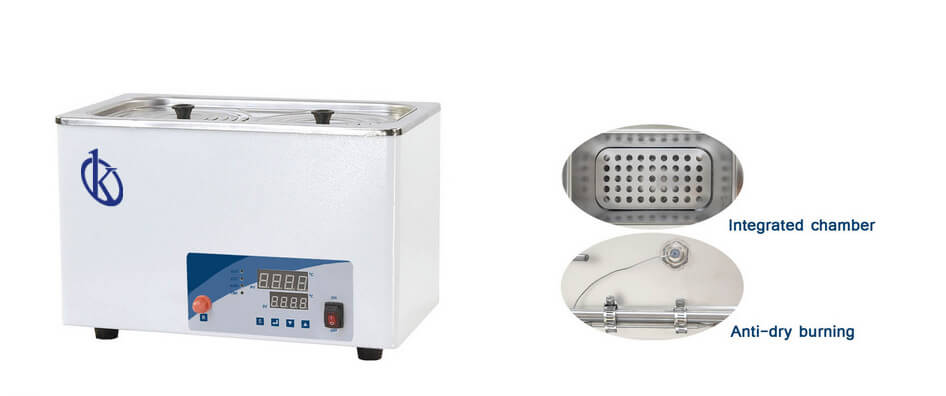
Comparative Analysis of Water Baths: Choosing the Best for Laboratory Applications
Water baths are essential laboratory equipment widely used for various applications, including heating, temperature control, and sample preparation. With several models available in the market, selecting the right water bath can be a daunting task. This article offers a comprehensive comparative analysis of different water bath models, focusing on their specifications, applications, and how they stack up against alternative technologies.
Understanding the Role of Water Baths in Laboratories
Water baths play a crucial role in laboratories by providing a stable temperature environment for experiments that require precise heat application. Their versatility allows them to be used in various scientific fields, including biotechnology, chemistry, and environmental testing. Selecting the right water bath involves understanding the specific requirements of your laboratory processes and the unique features of available models.
Comparison of Available Models
| Model | Temperature Range (°C) | Power (W) | Price (USD) | Best For |
|---|---|---|---|---|
| YR05073 | RT +5 to 100 | 300/600/800/1200 | 67.00 | General laboratory use |
| YR05074 | RT +5 to 100 | 300/600/800/1200 | 80.00 | General laboratory use |
| YR030L | RT to 100 | Up to 300 | 602.00 | Agitation applications |
| YR05001 | -35 to 200 | 3000 | 1974.00 | Chemical reactors |
| YR05002 | -35 to 200 | 6000 | 2646.00 | Chemical reactors |
| YR05003 | -35 to 200 | 6000 | 2982.00 | Chemical reactors |
Comparative Analysis of Water Baths
This section provides a detailed comparison of different water bath models based on various criteria crucial for laboratory purchase decisions. Each model possesses unique features that cater to specific laboratory needs.
Temperature Control and Stability
Temperature stability is a critical feature for water baths, especially in experiments requiring precise conditions. Models such as YR05073 and YR05074 offer a temperature range from RT +5 to 100 °C, ensuring reliability for general laboratory tasks. In contrast, YR05001, YR05002, and YR05003 provide a broader range from -35 to 200 °C, making them suitable for chemical reactions requiring extreme temperature control.
Power Consumption and Efficiency
Power consumption is another significant aspect to consider. Models YR05073 and YR05074 have multiple power options ranging from 300W to 1200W, allowing flexibility based on the experiment's requirements. Meanwhile, the YR series circulators, YR05001, YR05002, and YR05003, with higher power ratings (up to 6000W), are designed for greater efficiency in intensive processes.
Best Use Cases and Applications
When selecting a water bath, understanding its best use cases is essential. For general laboratory tasks, both YR05073 and YR05074 are widely recommended due to their versatility and affordability. Conversely, if agitation is necessary, the YR030L model is tailored for use in biochemical studies involving cell cultures or bacterial growth.
Common Mistakes and How to Avoid Them
Laboratory professionals often encounter pitfalls when selecting water baths. Here are some common mistakes and strategies to avoid them:
- Overlooking Temperature Range: Always ensure the water bath's temperature range aligns with your experimental needs.
- Ignoring Power Requirements: Evaluate the power consumption and efficiency to avoid increased operational costs over time.
- Neglecting Maintenance Needs: Select models with ease of maintenance to minimize downtime and ensure consistent operation.
Frequently Asked Questions
What are the best water bath options for laboratory temperature control?
The best water bath options for laboratory temperature control include the YR05073 and YR05074 models, with temperature ranges from RT +5 to 100 °C, suitable for general laboratory use.
How do I determine the right water bath for my laboratory's needs?
To determine the right water bath for your laboratory's needs, consider factors such as temperature range, power consumption, and specific applications, such as the YR030L model for agitation applications.
Which water bath models are ideal for chemical reactions requiring temperature control?
The YR05001, YR05002, and YR05003 models are ideal for chemical reactions requiring temperature control, offering a range of -35 to 200 °C and high power ratings for efficiency.
What are the common temperature fluctuations in water baths?
Common temperature fluctuations in water baths can range from ±0.5 °C to ±1 °C, depending on the model; for example, the YR05073 maintains a fluctuation of ≤±0.5 °C.
How can I maximize the efficiency of my water bath in laboratory use?
To maximize the efficiency of your water bath, regularly monitor the temperature settings, ensure proper maintenance, and select models like YR05074 that offer versatile power options for different applications.
What is the average lifespan of a laboratory water bath?
The average lifespan of a laboratory water bath varies by usage and model quality, but with proper maintenance, models such as the YR05073 can last several years in regular laboratory settings.
How do safety features differ among water bath models?
Safety features in water bath models differ, with options like the YR05073 offering overcurrent protection and over-temperature alarms, ensuring safe operation during experiments.
What is the expected ROI for using a high-quality water bath in a lab?
The expected ROI for using a high-quality water bath, such as the YR030L, can be significant due to its efficiency and reliability, leading to lower operational costs and improved experimental outcomes.
If you are looking for a fusion of innovation and quality, you have come to the right place. At Kalstein, we offer you the luxury of exploring our exclusive catalog of laboratory equipment. We manufacture every device to the highest standards of excellence. Our intuitive and seamless online purchasing channels are designed for your convenience, securing the most competitive prices. Hesitate no longer — we bring science to life, it is time to become part of our community.