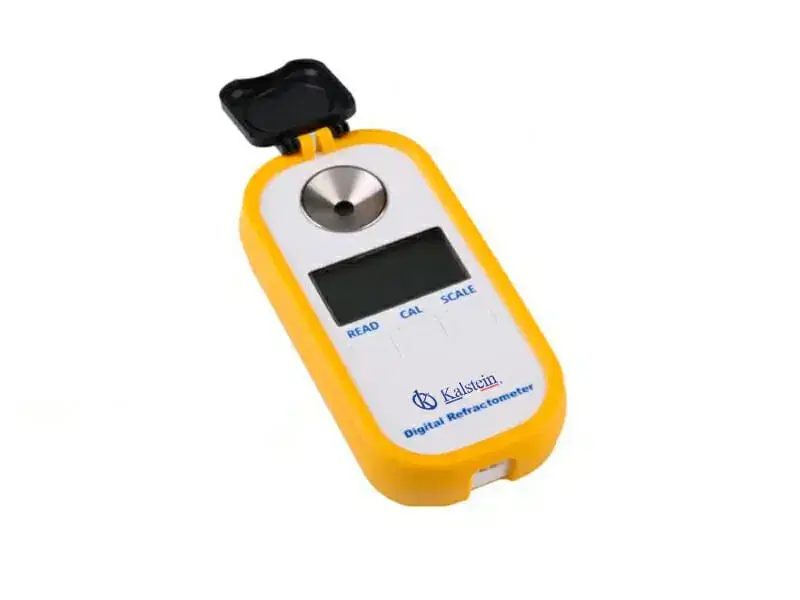
Digital BRIX+ Salinity Refractometers: Practical Applications and Techniques 2026
What is it used for in 2026
Digital BRIX+ Salinity Refractometers are instrumental in laboratories that require precision in measuring dissolved solids, specifically sugars, and salinity levels in various aqueous solutions. In 2026, these devices play a crucial role in food and beverage industries, environmental monitoring, and clinical laboratories, where accurate measurements can impact quality control, product consistency, and results interpretation.
History and evolution of the technology
The evolution of refractometry dates back to the 19th century, when early measurements relied on a manual refractometer. Over the decades, advancements in optics and electronics have led to the development of digital refractometers, providing greater accuracy and ease of use. The introduction of automatic temperature compensation (ATC) has further enhanced these devices, allowing for more reliable measurements across varying environmental conditions.
How to use it step by step
Using a Digital BRIX+ Salinity Refractometer involves several straightforward steps:
- Preparation: Ensure the refractometer is clean and calibrated.
- Sample Placement: Place a few drops of the liquid sample on the prism.
- Close the lid: Ensure no air bubbles are present.
- Read the measurement: Turn on the device and read the results displayed on the digital screen.
- Record results: Document the measurements for analytical purposes.
Best techniques and protocols
To achieve optimal results when using Digital BRIX+ Salinity Refractometers, consider adopting the following techniques:
- Always calibrate the device before use with a known standard solution.
- Ensure samples are at the recommended temperature for accurate readings.
- Use freshly prepared solutions to avoid degradation or evaporation.
- Regularly clean the prism to prevent contamination.
- Follow manufacturer guidelines for maintenance and troubleshooting.
Practical applications by laboratory type
Different laboratory types utilize Digital BRIX+ Salinity Refractometers for various applications:
- Food Industry: Measuring sugar content in juices, syrups, and other products.
- Environmental Monitoring: Assessing salinity in water bodies to gauge ecological health.
- Clinical Laboratories: Analyzing body fluids for sugar levels as a diabetes monitoring tool.
Regulations, standards and certifications
In 2026, laboratories must ensure that their Digital BRIX+ Salinity Refractometers comply with relevant standards and certifications. This may include ISO 9001 for quality management systems and specific food safety standards such as HACCP (Hazard Analysis Critical Control Point). Regular audits and compliance checks are essential to maintain standards in laboratory practices.
Comparison with alternative technologies
Although Digital BRIX+ Salinity Refractometers are versatile, alternative technologies exist, such as:
- Conductivity Meters: Used for salinity measurements but less precise for sugar concentration.
- Spectrophotometers: Useful for various analytical measurements but may require more complex sample preparation.
Comparison of available models
| Model | Best for | Key specs | Recommended use case |
|---|---|---|---|
| YR05961 | Brix measurement | 0-50% Brix, ATC 0-40°C | Juice and syrup analysis |
| YR05962 | Salinity measurement | 0-280‰ Salinity, ATC 0-40°C | Environmental salinity testing |
| YR05963 | Salinity measurement | 0-280‰ Salinity, ATC 0-40°C | Marine biology applications |
| YR05964 | Density measurement | 1.000-1.217 Density, ATC 0-40°C | Density assessments in various solutions |
| YR05965 | Refractive index measurement | 1.3330-1.4200 nD, ATC 0-40°C | General laboratory applications |
Common mistakes and how to avoid them
When using Digital BRIX+ Salinity Refractometers, common mistakes include:
- Not calibrating the refractometer before use — ensure calibration is done with a standard solution.
- Using dirty prisms — always clean before and after use to avoid contamination.
- Ignoring temperature effects — always wait for the sample to normalize to room temperature.
Maintenance, calibration and good practices 2026
Regular maintenance of refractometers includes:
- Calibrate frequently using standard solutions.
- Clean the prism with distilled water and soft tissue.
- Store in a protective case away from extreme temperatures.
Cost-benefit analysis 2026
Investing in a Digital BRIX+ Salinity Refractometer can be justified by the precision in results it provides, thereby reducing errors in production and analysis. Over time, the cost of equipment can be outweighed by savings in lost materials due to inaccurate measurements and the increased efficiency in laboratory workflows.
Frequently asked questions
What type of samples can I measure with a Digital BRIX+ Salinity Refractometer?
You can measure a variety of aqueous solutions, including fruit juices, syrups, and seawater, depending on the specific model's capabilities.
How often should I calibrate my refractometer?
It is recommended to calibrate your refractometer before each use or whenever you switch to a different sample type to ensure accuracy.
Can I use the refractometer to measure temperature-sensitive samples?
While some models have ATC, it is best to allow samples to reach room temperature for the most accurate readings.
What is the typical lifespan of a Digital BRIX+ Salinity Refractometer?
With proper maintenance, these devices can last several years, but frequent use may necessitate more regular servicing.
How do I know which model is best for my laboratory needs?
Assess your primary measurement needs; for sugar concentration, the Brix models are ideal, while for salinity, choose the salinity-specific models.
What should I do if my readings seem inconsistent?
Ensure the device is calibrated and that the prism is clean; also check for possible air bubbles in the sample.
Where can I request a quote for a Digital BRIX+ Salinity Refractometer?
You can request a quote directly from the supplier or manufacturer, who will provide the necessary information based on your requirements.
If you are looking for a fusion of innovation and quality, you have come to the right place. At Kalstein, we offer you the luxury of exploring our exclusive catalog of laboratory equipment. We manufacture every device to the highest standards of excellence. Our intuitive and seamless online purchasing channels are designed for your convenience, securing the most competitive prices. Hesitate no longer — we bring science to life, it is time to become part of our community.