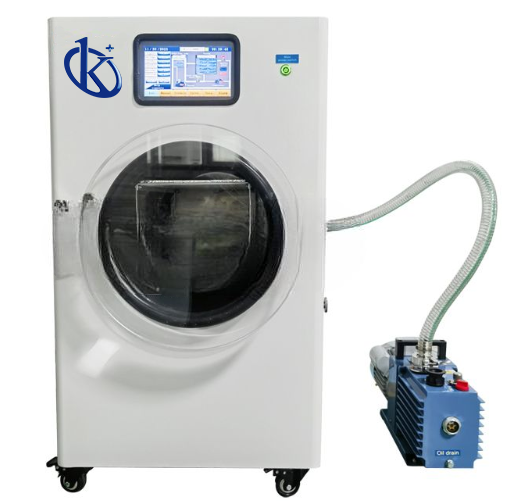
Food Freeze Dryers: Practical Applications and Techniques 2026
What is it used for in 2026
Food freeze dryers are essential in preserving a variety of food items, pharmaceuticals, and biological samples by removing moisture content while maintaining structural integrity, flavor, and nutrients. In 2026, these devices are utilized across laboratories to enhance storage stability, reduce weight and volume, and create products that retain high quality even after long periods of storage.
History and evolution of the technology
The freeze-drying process, known as lyophilization, has evolved significantly since its inception in the early 20th century. Originally developed for preserving blood plasma during World War II, the technology has progressed to encompass a wide range of applications in food preservation, pharmaceuticals, and research laboratories. Over the decades, advancements in vacuum technology, control systems, and energy efficiency have shaped modern food freeze dryers, allowing for improved performance and usability.
How to use it step by step
- Preparation: Begin by preparing the product for freeze-drying. Clean and cut food items or samples into uniform sizes.
- Loading: Place the prepared items onto the trays of the freeze dryer, ensuring they are evenly spaced and not overcrowded.
- Setting Parameters: Adjust the freeze-drying settings based on the product type, including temperature and pressure settings.
- Initiation: Start the freeze-drying process using the control panel. Monitor the process to ensure optimal conditions are maintained.
- Finalization: Upon completion, remove the trays carefully and store the dried products in moisture-proof containers.
Best techniques and protocols
Employing best practices is crucial for effective freeze drying. Key techniques include:
- Using pre-freezing to lower product temperature before starting the main drying cycle.
- Monitoring vacuum levels throughout the process to ensure consistent drying.
- Regularly calibrating equipment to maintain accuracy in temperature and pressure settings.
- Utilizing desiccants in storage to further prevent moisture absorption post drying.
Practical applications by laboratory type
Different types of laboratories utilize food freeze dryers for various purposes:
- Food Laboratories: For developing long-lasting food products that retain nutritional value.
- Pharmaceutical Laboratories: To stabilize vaccines and sensitive medications for extended shelf-life.
- Biological Research: For preserving biological specimens without compromising cellular integrity.
Regulations, standards and certifications
Food freeze dryers must comply with several regulations and standards, including:
- FDA regulations for food and drug safety.
- ISO certifications related to quality management systems in manufacturing.
- CE marking for compliance with European health, safety and environmental protection standards.
Comparison with alternative technologies
While freeze drying is highly effective, alternative methods such as air drying, vacuum drying, and spray drying each have their own advantages and disadvantages:
- Air Drying: Simpler and cheaper, but often results in loss of flavor and nutrients.
- Vacuum Drying: Maintains better flavor than air drying but can be costlier than freeze drying.
- Spray Drying: Quick process, ideal for liquids, but may not retain the structural integrity of solid items.
Comparison of available models
| Model | Best for | Key Specs | Recommended Use Case |
|---|---|---|---|
| YR05984 | General food freeze drying | Size: 700x860x930mm, Power: 1550w | Small to medium sized batches of food products. |
| YR05983 | Home use | Size: 400x550x700mm, Power: 1100w | Home applications for freeze-drying fruits and vegetables. |
| YR05985 | Fruits and vegetables | Size: 700x800x1300mm, Power: 2000w | Higher capacity for small-scale commercial operations. |
| YR06612 | Large scale production | Size: 7000x8500x3200mm, Power: 150kw | Ideal for industrial applications needing large volume processing. |
Common mistakes and how to avoid them
Common pitfalls in freeze drying include:
- Overloading trays which can hinder air circulation and lead to uneven drying.
- Inadequate pre-freezing, resulting in longer drying times and potential product quality degradation.
- Neglecting regular maintenance which can decrease the efficiency of the equipment.
Maintenance, calibration and good practices 2026
To ensure optimal operation of food freeze dryers in 2026:
- Establish a regular cleaning schedule to prevent contamination.
- Perform routine calibration checks on temperature and pressure gauges.
- Train staff on best practices for loading, monitoring, and unloading freeze-dried products.
Cost-benefit analysis 2026
A cost-benefit analysis for laboratories investing in freeze-drying technology should consider:
- Initial purchase costs versus long-term savings through reduced waste and improved product longevity.
- Operational costs such as energy consumption against the revenue generated from high-quality products.
- Potential for increased marketability of products that retain their quality over time.
Frequently asked questions
How do I choose the right model of food freeze dryer?
Choosing the right model depends on your specific needs such as the volume of product to be dried, space availability, and budget constraints. Evaluate features such as capacity, power consumption, and size before making a decision.
What types of food can be freeze dried?
Almost any food item can be freeze dried, including fruits, vegetables, meats, and even prepared meals. Consider the moisture content and structure for optimal results.
How long does the freeze-drying process take?
The duration of the freeze-drying process varies based on the product type and volume. Typically, it can take anywhere from 24 hours to several days for complete drying.
Can I freeze dry liquids?
Yes, liquids can be freeze dried, but they generally need to be pre-frozen and may require special considerations in terms of equipment settings for optimal results.
What storage conditions are best for freeze-dried products?
Store freeze-dried products in airtight containers in a cool, dark place to preserve their quality and prolong shelf life. Avoid exposure to moisture and heat.
Is training required to operate a food freeze dryer?
While basic operation can be straightforward, training is recommended to understand best practices, maintenance, and troubleshooting to achieve optimal results.
How can I request a quote for a food freeze dryer?
You can easily request a quote through our sales team or online platform, where a representative will assist you with your requirements and pricing options.
If you are looking for a fusion of innovation and quality, you have come to the right place. At Kalstein, we offer you the luxury of exploring our exclusive catalog of laboratory equipment. We manufacture every device to the highest standards of excellence. Our intuitive and seamless online purchasing channels are designed for your convenience, securing the most competitive prices. Hesitate no longer — we bring science to life, it is time to become part of our community.