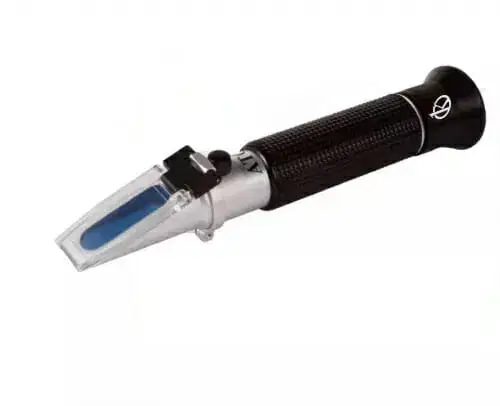
Honey Refractometers: Practical Applications and Techniques 2026
What is it used for in 2026
In 2026, honey refractometers are essential tools in laboratories and industries dealing with sugar-related liquids. They are primarily used to measure the concentration of sugar in honey, syrups, jams, and other food products, allowing professionals to ensure quality and compliance with food standards. These devices enable the monitoring of sugar content, which is crucial for maintaining product quality, especially post-harvest and during processing.
History and evolution of the technology
The refractometer's origins trace back to the 19th century, when it was developed as a tool for measuring the refractive index of liquids. Over time, the technology evolved significantly, incorporating advancements in optics and precision engineering. By the 21st century, specialized refractometers for honey and similar products emerged, featuring enhanced accuracy and user-friendly designs, marking a pivotal shift in laboratory practices and quality control processes.
How to use it step by step
Using a honey refractometer involves several straightforward steps:
- Preparation: Clean the prism and ensure the refractometer is calibrated.
- Sample application: Place a few drops of honey on the prism surface.
- Measurement: Close the cover plate and look through the eyepiece to read the scale.
- Record the results: Document the Brix value and any other relevant data for analysis.
Best techniques and protocols
To achieve accurate readings with honey refractometers in 2026, professionals should adhere to best practices:
- Ensure the device is calibrated frequently according to manufacturer specifications.
- Use a consistent temperature range for measurements, ideally between 10-30°C.
- Clean the prism thoroughly after each use to prevent contamination.
- Take multiple readings to ensure reliability and average the results for accuracy.
Practical applications by laboratory type
Honey refractometers find applications across various types of laboratories:
- Food Quality Control Labs: Used to ensure honey meets industry standards.
- Agricultural Research: Helps in studying the sweetness levels of fruits and other plants.
- Food Processing Facilities: Monitors sugar concentrations during product formulations.
Regulations, standards and certifications
In 2026, honey refractometers must adhere to international food safety standards, such as those set by the Food and Drug Administration (FDA) and the European Food Safety Authority (EFSA). Compliance with these regulations ensures that products are safe for consumption and meet labeling requirements. Regular calibration and certification of equipment are also critical to maintaining compliance.
Comparison with alternative technologies
Compared to alternative technologies like hydrometers and digital refractometers, honey refractometers offer several advantages:
- Precision: They provide more accurate readings for small liquid samples.
- Ease of Use: Simple operation allows for rapid assessment without extensive training.
- Portability: Many models are compact and easy to carry for field testing.
Comparison of available models
| Model | Best for | Key specs | Recommended use case |
|---|---|---|---|
| YR05885 | Honey and sugar solutions | 58-92% Brix, 38-43 Be’, 12-27% water | Quality control in honey production |
| YR05885-1 | High sugar content liquids | 58-92% Brix, 38-43 Be’, 12-27% water | Monitoring syrup and jam concentrations |
| YR05885-2 | Honey testing | 58-92% Brix, 38-43 Be’, 12-27% water | Field checking honey maturity |
| YR05886 | Syrups and beverages | 10-30% water | Product formulation in food processing |
Common mistakes and how to avoid them
Several common mistakes can occur when using honey refractometers:
- Not calibrating the refractometer regularly, leading to inaccurate readings.
- Using samples at incorrect temperatures, which can affect the refractive index.
- Failing to clean the prism between samples, risking contamination.
Maintenance, calibration and good practices 2026
For optimal performance in 2026:
- Calibrate the refractometer before each use with distilled water.
- Store the device in a protective case to prevent damage.
- Perform routine maintenance checks to ensure all components are functional.
Cost-benefit analysis 2026
Investing in a honey refractometer provides significant benefits over time, including:
- Improved product quality assurance leading to higher customer satisfaction.
- Reduced waste by ensuring sugar concentrations meet standards.
- Cost savings from minimizing product recalls and non-compliance penalties.
Frequently asked questions
What are the main advantages of using a honey refractometer?
Honey refractometers provide precise measurements of sugar concentration in various liquids, essential for quality control in food production. They are easy to use and require minimal sample sizes, making them very efficient for laboratories.
How can I ensure accurate readings with my refractometer?
To ensure accuracy, regularly calibrate the refractometer using distilled water, maintain a consistent temperature during measurements, and clean the prism after each use to prevent contamination.
Can honey refractometers be used for other liquids?
Yes, while primarily designed for honey, these refractometers can effectively measure sugar concentrations in syrups, jellies, and certain beverages.
What is the best way to clean a honey refractometer?
Use a soft, lint-free cloth and a mild detergent to clean the prism. Avoid using abrasive materials that could scratch the surface and affect readings.
How often should a honey refractometer be calibrated?
It is recommended to calibrate the refractometer before each measurement session to ensure the highest accuracy.
What should I do if my refractometer is giving inconsistent readings?
Check for any residue on the prism, ensure proper calibration, and verify that the temperature of the sample is within the recommended range. If the issue persists, consult the manufacturer’s guidelines or seek professional servicing.
If you are looking for a fusion of innovation and quality, you have come to the right place. At Kalstein, we offer you the luxury of exploring our exclusive catalog of laboratory equipment. We manufacture every device to the highest standards of excellence. Our intuitive and seamless online purchasing channels are designed for your convenience, securing the most competitive prices. Hesitate no longer — we bring science to life, it is time to become part of our community.