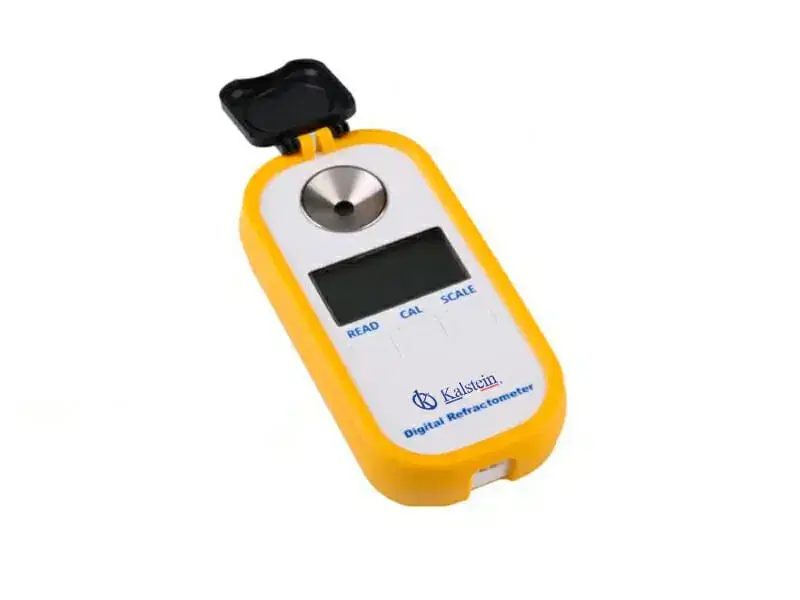
How to Ensure ISO/IEC Compliance with Digital BRIX Refractometers
In the laboratory setting, compliance with ISO/IEC standards is critical for ensuring quality, accuracy, and reliability of results. This article delves into the roles that digital BRIX refractometers play in conforming to ISO/IEC regulations and how various models can assist in achieving compliance.
Understanding ISO/IEC Standards for Laboratories
The ISO/IEC 17025 standard is essential for laboratories, as it outlines the general requirements for the competence of testing and calibration laboratories. Compliance ensures that laboratories can produce valid and reliable results. Digital BRIX refractometers, designed to measure the concentration of soluble solids in liquids, are common tools in industries such as food and beverage, pharmaceuticals, and chemical manufacturing.
Key ISO/IEC Standards Relevant to Digital BRIX Refractometers
Digital BRIX refractometers must meet various ISO/IEC standards, including:
- ISO 17025: Ensures laboratories are competent to carry out tests and calibrations.
- IEC 61010: Specifies safety requirements for electrical equipment used in measurement, control, and laboratory use.
- ISO 15189: Specifically tailored for medical laboratories ensuring quality and competence.
Compliance Through Quality Control: Benefits of Digital BRIX Refractometers
Digital BRIX refractometers enhance compliance through automated processes, which reduce human error. With features like automatic temperature compensation (ATC), these devices ensure that measurements remain consistent regardless of environmental changes. This is vital for meeting the accuracy requirements set by ISO/IEC standards.
Model Highlights and Compliance Overview
Each model of digital BRIX refractometer offers unique features that contribute to compliance:
- YR05944: Best for measuring sugar concentrations in beverages, ensuring ISO compliance through precise readings from 0.0-50.0% Brix.
- YR05945: Offers a wider range of 0.0-90.0% Brix, ideal for various food products, fulfilling stringent standards with ±0.2% accuracy.
- YR05946: Covers 1.3330-1.5177 nD index of refraction, enabling compliance through detailed liquid analysis.
- YR05947: Specifically designed to measure dextran levels from 0.0-10.6%, ensuring accuracy for specialty applications.
- YR05948: Suited for fructose measurement (0.0-68.9%), simplifying compliance with food industry standards.
- YR05949: Measures glucose concentrations (0.0-59.9%), essential for both food and health applications.
- YR05950: Targets lactose content, ideal for dairy product testing, ensuring compliance with industry practices.
Comparison of Available Models
| Model Code | Measurement Range | Min. Division | Accuracy | Best for |
|---|---|---|---|---|
| YR05944 | 0.0-50.0% Brix | 0.10% | ±0.2% | Beverage analysis |
| YR05945 | 0.0-90.0% Brix | 0.10% | ±0.2% | Food products |
| YR05946 | 1.3330-1.5177 nD | 0.0001 nD | ±0.0003 nD | Liquid analysis |
| YR05947 | 0.0-10.6% Dextran | 0.10% | ±0.2% | Specialized applications |
| YR05948 | 0.0-68.9% Fructose | 0.10% | ±0.2% | Food industry |
| YR05949 | 0.0-59.9% Glucose | 0.10% | ±0.2% | Food and health |
| YR05950 | 0.0-1% Lactose | 0.10% | ±0.2% | Dairy testing |
Common Mistakes and How to Avoid Them
Laboratories often face challenges in maintaining ISO/IEC compliance. Common mistakes include neglecting calibration schedules, not documenting procedures correctly, and failing to keep up with regulatory updates. To avoid these pitfalls, establish a regular calibration plan, maintain thorough documentation, and train staff on compliance requirements.
Integrating Digital BRIX Refractometers into Laboratory Protocols
When incorporating digital BRIX refractometers into laboratory protocols, it’s essential to consider how these devices will interact with existing systems. Ensuring that lab personnel are trained in the proper operation and maintenance of these instruments is crucial for compliance and accuracy.
What Role Does Calibration Play in Compliance?
Calibration is critical to achieving compliance with ISO/IEC standards. Regular calibration ensures that measurements remain within the required accuracy limits. For instance, the YR05944 model’s precision of ±0.2% must be verified through routine calibration against traceable standards.
Frequently Asked Questions
How do digital BRIX refractometers help maintain ISO 17025 compliance?
Digital BRIX refractometers, like the YR05945, provide accurate measurements essential for ISO 17025 compliance. Their automated temperature compensation ensures consistent results, meeting the precision requirements crucial for this standard.
What are the specific calibration requirements for YR05944 model in laboratories?
The YR05944 model must undergo calibration at regular intervals to maintain its accuracy of ±0.2%. Calibration should be done using traceable standards, ensuring compliance with ISO/IEC regulations.
Which model is best for measuring glucose according to ISO standards?
The YR05949 model is optimal for measuring glucose levels, functioning within a 0.0-59.9% range. This model’s precision is key for laboratories adhering to ISO standards for food and health testing.
What are the key features of the YR05948 model for compliance?
The YR05948 model measures fructose levels from 0.0-68.9%, featuring automatic temperature compensation. These attributes align with compliance requirements, making it suitable for the food industry.
How can digital BRIX refractometers support food safety regulations?
Digital BRIX refractometers like the YR05946 assist in food safety by providing precise measurements of soluble solids, which are critical for adhering to food safety regulations and standards.
What are the benefits of using ATC in digital BRIX refractometers?
Automatic Temperature Compensation (ATC) in models like the YR05944 helps eliminate errors due to temperature fluctuations, ensuring compliance with ISO standards that demand accuracy in measurement.
How often should calibration be performed for digital BRIX refractometers?
Calibration for digital BRIX refractometers should be performed regularly, ideally before each series of measurements, to ensure compliance and maintain accuracy in accordance with ISO/IEC standards.
What documentation is necessary for ISO 17025 compliance with refractometers?
Documentation for ISO 17025 compliance includes calibration records, maintenance logs, and standard operating procedures detailing the use and care of instruments like the YR05945 model.
If you are looking for a fusion of innovation and quality, you have come to the right place. At Kalstein, we offer you the luxury of exploring our exclusive catalog of laboratory equipment. We manufacture every device to the highest standards of excellence. Our intuitive and seamless online purchasing channels are designed for your convenience, securing the most competitive prices. Hesitate no longer — we bring science to life, it is time to become part of our community.