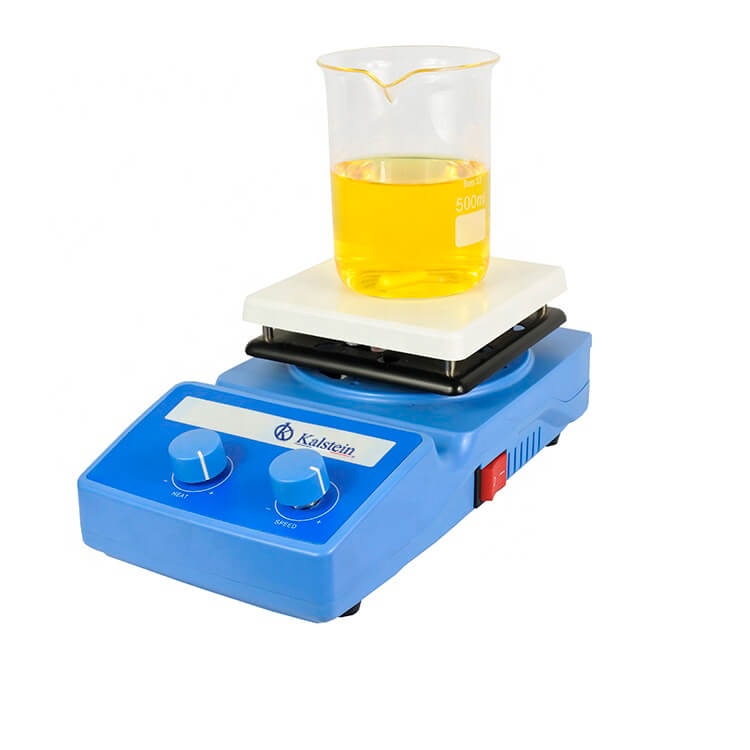
Maximizing ROI with Analog Ceramic Top Hotplate Stirrers in Laboratories
In laboratory settings, the choice of equipment is crucial for operational efficiency and financial performance. Analog Ceramic Top Hotplate Stirrers are essential in various scientific applications, providing reliable heating and stirring capabilities. This article delves into the return on investment (ROI) and cost-benefit analysis associated with these devices, offering insights for laboratory professionals on making informed purchasing decisions.
Understanding ROI in Laboratory Equipment
Return on investment (ROI) is a key metric for evaluating the financial return on any investment made in laboratory equipment. In this context, ROI for Analog Ceramic Top Hotplate Stirrers revolves around their initial capital expenditure (CAPEX), operational expenses (OPEX), and the benefits realized from their use.
Key Benefits of Analog Ceramic Top Hotplate Stirrers
Analog Ceramic Top Hotplate Stirrers are preferred for their quiet operation, efficiency, and minimal parts that may wear out. These features not only enhance user experience but also contribute to reduced maintenance costs over time. The following models are prominent in this category:
- YR02933: This model is an economical choice, offering a reliable performance for basic stirring and heating tasks.
- YR02934: Known for its PID temperature control, this model is best suited for precise temperature applications.
- YR02935: This model features a robust design, ideal for heavy-duty applications up to 10L.
- YR02936: With a large heating surface, this model is perfect for larger vessels and higher throughput.
Comparative Cost-Benefit Analysis of Models
| Model | CAPEX (USD) | Cost per Use | Payback Period (Months) | Best Application |
|---|---|---|---|---|
| YR02933 | 125.00 | 0.25 | 6 | Basic stirring tasks |
| YR02934 | 152.00 | 0.30 | 8 | Precise temperature control |
| YR02935 | 190.00 | 0.35 | 9 | Heavy-duty applications |
| YR02936 | 265.00 | 0.40 | 12 | High throughput stirring |
Common Mistakes and How to Avoid Them
When investing in Analog Ceramic Top Hotplate Stirrers, laboratory professionals sometimes overlook crucial factors such as energy efficiency, ease of maintenance, and suitability for specific applications. It's essential to assess the actual usage scenarios and the specific requirements of your laboratory before making a purchase.
Furthermore, not conducting a thorough cost-benefit analysis can lead to overestimating the capabilities of less suitable models. Always compare models based on your laboratory's unique needs and projected outcomes.
Frequently Asked Questions
How can I evaluate the ROI of an Analog Ceramic top Hotplate Stirrer?
To evaluate the ROI of an Analog Ceramic Top Hotplate Stirrer, consider initial costs, operating expenses, and the efficiency gains from using models like YR02934 which offers PID temperature control that could reduce consumable costs by 10% over time.
What are the operational costs associated with using YR02935?
The operational costs for YR02935, which is ideal for heavy-duty applications, typically revolve around energy consumption and consumable usage. Estimate costs per use to be around $0.35 which makes it cost-effective for regular laboratory tasks.
Which features should I prioritize when choosing a Hotplate Stirrer for my lab?
Prioritize features such as temperature control accuracy, heating surface area, and energy efficiency. Models like YR02934 offer a precise PID control, enhancing application results and reducing variability in experiments.
How does the performance of YR02936 compare to its competitors?
YR02936 is known for its large heating surface and high throughput capabilities, making it ideal for larger applications compared to other models, which may not support broader vessel sizes effectively, enhancing workflow efficiency.
What is the typical payback period for these Hotplate Stirrers?
The payback period for Analog Ceramic Top Hotplate Stirrers like YR02933 typically ranges from 6 to 12 months, depending on usage and specific laboratory applications, making them financially feasible options for labs.
Can these stirrers operate efficiently under varying laboratory conditions?
Yes, Analog Ceramic Top Hotplate Stirrers are designed to operate efficiently under various laboratory conditions, with temperature ranges up to 380 degrees, ensuring adaptability for different experimental setups.
What maintenance is required for Analog Ceramic Top Hotplate Stirrers?
Regular cleaning of the ceramic surface and periodic checks of electrical components are essential maintenance tasks. Models like YR02935, with fewer moving parts, require less maintenance, enhancing their longevity.
How do I select the ideal model for a specific laboratory application?
Assess the specific heating and stirring requirements of your applications. For instance, YR02936 is excellent for high throughput tasks, while YR02933 serves well for basic laboratory needs, aligning with your operational goals.
If you are looking for a fusion of innovation and quality, you have come to the right place. At Kalstein, we offer you the luxury of exploring our exclusive catalog of laboratory equipment. We manufacture every device to the highest standards of excellence. Our intuitive and seamless online purchasing channels are designed for your convenience, securing the most competitive prices. Hesitate no longer — we bring science to life, it is time to become part of our community.