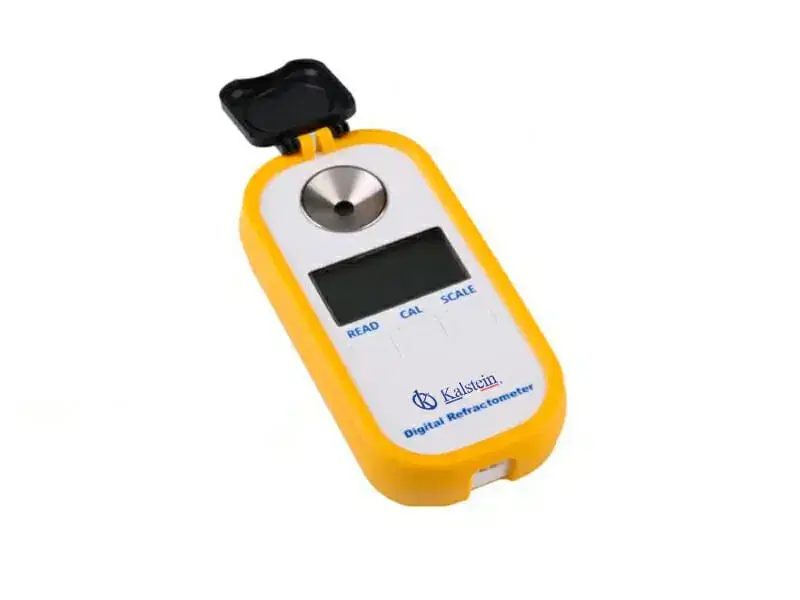
Maximizing ROI and Cost-Benefit Analysis for Digital Salinity Refractometers
The effective management of laboratory resources is paramount for achieving operational excellence. Digital salinity refractometers play a crucial role in various laboratory settings, particularly in fields like marine biology, environmental science, and food quality control. This article aims to provide laboratory professionals with a comprehensive understanding of how to maximize return on investment (ROI) and conduct a thorough cost-benefit analysis for digital salinity refractometers.
Understanding Digital Salinity Refractometers
Digital salinity refractometers are specialized instruments used to measure the concentration of salt in liquids. They are essential for accurately determining salinity in solutions, thereby facilitating various applications such as monitoring seawater quality, testing food products, and assessing water treatment processes. The precision and ease of use offered by digital models enhance laboratory workflows and can lead to significant financial benefits over time.
Key Benefits of Digital Salinity Refractometers
Investing in digital salinity refractometers, such as the models discussed in this article, can yield numerous benefits. These include enhanced accuracy, faster measurements, reduced reagent waste, and automated temperature compensation (ATC), which eliminates the need for manual adjustments. The examples provided below illustrate how each model can significantly contribute to a laboratory's operational efficiency.
Comparison of Available Models
| Model | Measurement Range | Minimum Division | Precision | Price (USD) | Best for |
|---|---|---|---|---|---|
| YR05953 | 0.0--28.0% | 0.10% | ±0.1% | 76.00 | General salinity measurement |
| YR05954 | 0--280‰ | 1‰ | ±1‰ | 76.00 | Brine solutions |
| YR05955 | 1.000-1.217 | 0.001 | ±0.002 | 76.00 | Density measurements |
| YR05956 | 1.3330--1.3900 nD | 0.0001 nD | ±0.0003 nD | 76.00 | Refractive index testing |
| YR05957 | 0—100‰ | 1‰ | ±2‰ | 76.00 | Seawater analysis |
| YR05958 | 0--57‰ | 1‰ | ±2‰ | 76.00 | Food quality control |
| YR05959 | 1.000-1.070 | 0.001 | ±0.002 | 76.00 | Density applications |
| YR05960 | 1.3330--1.3530 nD | 0.0001 nD | ±0.0003 nD | 76.00 | Advanced refractive index testing |
Conducting a Cost-Benefit Analysis for Digital Salinity Refractometers
To fully grasp the financial advantages of digital salinity refractometers, it is essential to conduct a thorough cost-benefit analysis. This involves evaluating initial acquisition costs (CAPEX), recurring operational costs (OPEX), and the expected return on investment over time.
For instance, consider the YR05953 model priced at $76.00. Assuming it is used for 500 tests annually, the cost per test would be calculated based on the equipment's lifespan and maintenance costs. In comparison, a more expensive model, such as YR05954, may offer additional functionality, such as a wider measurement range, justifying the higher initial investment. Analyzing these factors can help laboratories make informed purchasing decisions.
Common Mistakes and How to Avoid Them
In the quest to optimize laboratory performance through digital salinity refractometers, several common pitfalls can hinder ROI. One major mistake is underestimating the operational costs associated with equipment maintenance. Regular calibration and servicing can add to the long-term expenditure.
Another oversight is neglecting to assess the specific needs of the laboratory. Choosing a model that does not align with the intended application can lead to inefficiencies. For example, a model designed for seawater analysis, such as the YR05957, might not be suitable for brine solutions. Investing time in understanding the requirements can lead to better model selection and increased ROI.
Maximizing ROI: Practical Strategies for Laboratories
Laboratories can implement several strategies to maximize ROI when using digital salinity refractometers. First, leveraging the automatic temperature compensation feature in models like YR05953 and YR05954 can streamline operations, saving time and reducing human error in measurements.
Second, conducting regular training sessions for laboratory personnel ensures optimal usage of the equipment. This not only enhances accuracy but also extends the lifespan of the instruments through proper handling and maintenance. Finally, integrating these tools into a robust laboratory information management system (LIMS) can enhance data flow and analysis, contributing to better decision-making and overall efficiency.
Frequently Asked Questions
How can I assess the ROI of a digital salinity refractometer in my lab?
To assess the ROI of a digital salinity refractometer, calculate the total costs associated with acquisition, maintenance, and operation over its lifespan, and compare it against the savings generated through increased efficiency and accuracy. For instance, models like YR05954 can significantly reduce testing time, leading to a quicker return on investment.
What are the key operational costs associated with digital salinity refractometers?
Key operational costs for digital salinity refractometers include maintenance, calibration, and consumables required for testing. Understanding these costs helps in calculating the overall cost per test effectively. For example, the YR05955 model has specific calibration needs that should be factored into cost assessments.
Which digital salinity refractometer offers the best cost-benefit ratio?
The best cost-benefit ratio often depends on laboratory requirements. The YR05953 model provides an excellent balance of price and performance for general salinity measurement, making it a strong contender for cost-efficiency.
How does automatic temperature compensation impact the performance of salinity refractometers?
Automatic temperature compensation (ATC) enhances the accuracy of measurements by adjusting readings based on temperature variations. This feature, present in models like YR05956, minimizes the need for manual corrections and leads to more reliable results.
What factors should I consider when selecting a digital salinity refractometer?
When selecting a digital salinity refractometer, consider factors such as measurement range, precision, ease of use, and the specific applications you need it for. For example, if testing seawater, the YR05957 is tailored for such applications due to its appropriate measurement range.
How can digital salinity refractometers improve laboratory efficiency?
Digital salinity refractometers facilitate quicker and more accurate measurements, reducing the time spent on manual processes. Models like YR05954 streamline operations, allowing labs to process more samples efficiently, thereby improving overall productivity.
What are the advantages of using multiple models of digital salinity refractometers?
Using multiple models allows laboratories to diversify their testing capabilities. For instance, having both the YR05956 and YR05958 enables testing for refractive index and specific salinity levels, catering to a broader range of applications and improving versatility.
How significant is the financial impact of choosing the right digital salinity refractometer model?
Choosing the right model can significantly impact laboratory finances by optimizing workflows, reducing operational costs, and minimizing errors. Models like YR05954 may incur a higher initial cost but provide greater long-term savings through accuracy and efficiency.
If you are looking for a fusion of innovation and quality, you have come to the right place. At Kalstein, we offer you the luxury of exploring our exclusive catalog of laboratory equipment. We manufacture every device to the highest standards of excellence. Our intuitive and seamless online purchasing channels are designed for your convenience, securing the most competitive prices. Hesitate no longer — we bring science to life, it is time to become part of our community.