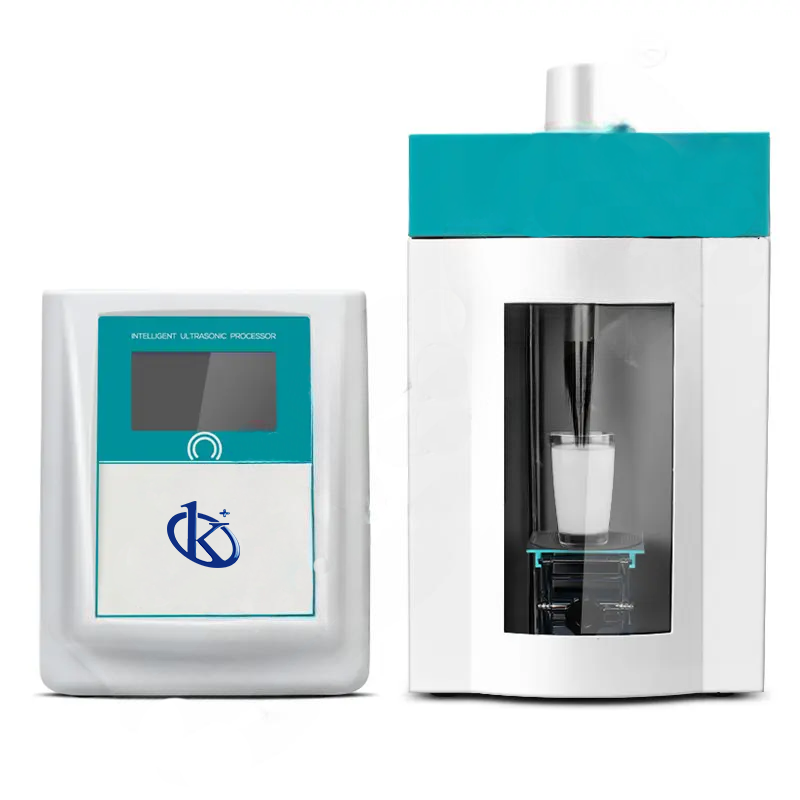
Maximizing ROI and Cost-Benefit Analysis for Ultrasonic Homogenizers
In today's competitive laboratory environment, understanding the return on investment (ROI) and conducting robust cost-benefit analyses are paramount for making informed decisions regarding equipment purchases. Ultrasonic homogenizers are critical tools in various applications across laboratories, particularly for sample preparation and processing. This article delves into how these devices contribute to ROI and cost-effectiveness, enabling laboratories to enhance productivity while minimizing operational costs.
Understanding Ultrasonic Homogenizers
Ultrasonic homogenizers utilize high-frequency sound waves to disrupt cells and emulsify liquids, making them essential in fields such as biotechnology, pharmaceuticals, and food processing. The effectiveness of these machines significantly impacts laboratory throughput, efficiency, and cost management. By evaluating multiple models through the lens of ROI and cost-benefit analysis, laboratories can choose equipment that aligns with their operational goals.
ROI and Cost-Benefit Analysis in Laboratories
ROI measures the gain or loss generated relative to the investment cost. In laboratory settings, calculating ROI involves evaluating the initial purchase cost against the savings generated through improved efficiencies, reduced labor, and enhanced output quality. Conducting a cost-benefit analysis allows laboratories to compare the advantages of ultrasonic homogenizers against their costs, often considering factors like maintenance, consumables, and operational efficiencies.
Key Factors Affecting ROI for Ultrasonic Homogenizers
Several factors influence the ROI of ultrasonic homogenizers:
- Purchase Cost: Initial acquisition costs can vary significantly between models.
- Operational Efficiency: Higher efficiency means more samples can be processed in less time.
- Energy Consumption: Analyzing the energy required for each operation can lead to significant savings.
- Maintenance Costs: Regular maintenance impacts long-term expenditures associated with equipment.
- Downtime: Minimizing downtime through robust equipment can enhance productivity.
Comparison of Available Models
| Model | Purchase Cost (USD) | Power (W) | Mixing Capacity (ml) | Best for |
|---|---|---|---|---|
| YR05015 | 756.00 | 150 | 150 | Small-scale homogenization |
| YR05016 | 882.00 | 250 | 300 | Medium-scale processes |
| YR05017 | 1050.00 | 650 | 500 | High-throughput applications |
| YR05018 | 1281.00 | 900 | 600 | Sample preparation for drug development |
| YR05019 | 1785.00 | 1200 | 1000 | Complex biological samples |
| YR05020 | 2058.00 | 1800 | 1200 | Large volume homogenization |
Common Mistakes and How to Avoid Them
When purchasing ultrasonic homogenizers, common mistakes can include ignoring total cost of ownership, underestimating the importance of energy efficiency, and not considering the specific needs of laboratory applications. It’s essential to evaluate not just the initial purchase price but also ongoing costs such as maintenance and consumables. Additionally, laboratories should assess the scalability of the chosen model to ensure it meets future demands.
Factors Influencing Cost-Benefit Analyses
In cost-benefit analyses, several quantitative measures should be considered:
- CAPEX vs. OPEX: Capital expenditures (CAPEX) include purchase costs, while operational expenditures (OPEX) encompass maintenance, energy, and consumables. Balancing these can reveal the true cost of ownership.
- Payback Period: Calculating the time required to recoup the initial investment can guide purchasing decisions.
- Cost Per Test: Evaluating the cost to process a single sample helps in understanding operational efficiency.
Energy Efficiency and Sustainability Considerations
Sustainability is increasingly important in laboratory operations. Energy-efficient models of ultrasonic homogenizers can significantly lower operational costs. For example, models with variable power settings allow users to optimize energy use based on specific tasks. Additionally, reducing energy consumption contributes positively to the laboratory's environmental footprint.
Integrating Ultrasonic Homogenizers into Laboratory Workflows
Successful integration involves evaluating how ultrasonic homogenizers fit within existing workflows. Factors like sample throughput, processing time, and compatibility with other laboratory instruments must be assessed to maximize efficiency. This ensures that the investment leads to tangible improvements in laboratory performance.
Frequently Asked Questions
How can I measure the ROI of an ultrasonic homogenizer in my lab?
To measure the ROI of an ultrasonic homogenizer, you can calculate the savings generated from increased efficiency against the total costs incurred, including the purchase price of models like YR05017 priced at $1050. Analyzing reductions in labor and operational costs will provide a clearer picture of potential financial benefits.
What factors should I consider when performing a cost-benefit analysis for ultrasonic homogenizers?
For a robust cost-benefit analysis of ultrasonic homogenizers, consider the initial purchase price, ongoing operational costs, expected lifespan, and the expected throughput of models such as YR05020. Evaluating these factors helps determine overall affordability and value.
Which ultrasonic homogenizer model offers the best energy efficiency?
The YR05019 model, with a continuous power of 1200W, is designed for energy efficiency while maximizing output. By optimizing energy use, it not only reduces costs but also supports a more sustainable laboratory approach.
How does ultrasonic homogenizer capacity affect laboratory productivity?
The capacity of an ultrasonic homogenizer, such as the YR05018 with a mixing capacity of 600 ml, significantly affects laboratory productivity. Higher capacity models reduce the number of batches needed, thus speeding up processes and improving throughput.
What is the typical payback period for ultrasonic homogenizers?
The payback period for ultrasonic homogenizers typically ranges from 6 to 12 months, depending on the initial investment and the efficiency gains realized in lab processes, particularly with models like YR05016 and YR05017.
How can I optimize the use of ultrasonic homogenizers in my lab?
Optimizing the use of ultrasonic homogenizers involves training staff on best practices, scheduling regular maintenance, and integrating models such as YR05019 into workflows to maximize throughput while minimizing downtime.
What are the operational costs associated with ultrasonic homogenizers?
Operational costs for ultrasonic homogenizers include energy consumption, maintenance, and consumables. For example, the YR05020 model's ongoing costs can be analyzed to ensure that the investment aligns with the laboratory's budget and efficiency goals.
How do ultrasonic homogenizers compare with other homogenization methods?
Ultrasonic homogenizers, such as the YR05015, offer superior efficiency and versatility compared to other homogenization methods like mechanical stirring. Their ability to process complex samples often leads to better results with a lower overall cost.
If you are looking for a fusion of innovation and quality, you have come to the right place. At Kalstein, we offer you the luxury of exploring our exclusive catalog of laboratory equipment. We manufacture every device to the highest standards of excellence. Our intuitive and seamless online purchasing channels are designed for your convenience, securing the most competitive prices. Hesitate no longer — we bring science to life, it is time to become part of our community.