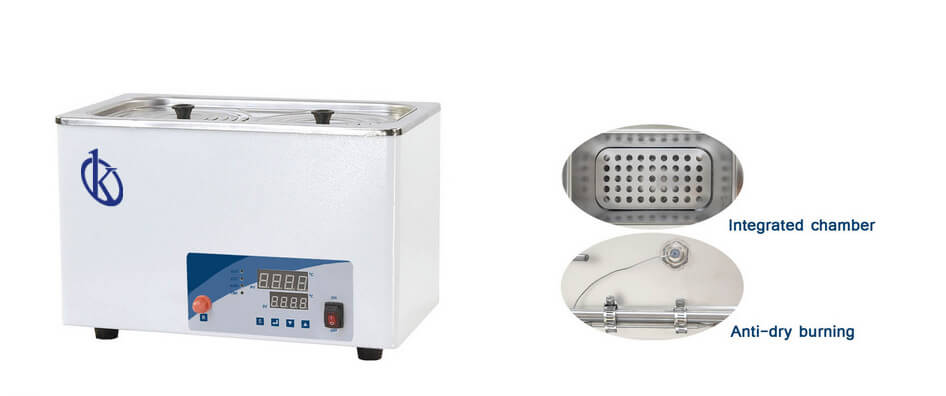
Maximizing ROI and Cost-Benefit Analysis for Water Baths in Laboratories
In today’s laboratory environment, making informed decisions based on return on investment (ROI) and cost-benefit analysis is crucial. Water baths are essential tools in various laboratory settings, serving multiple applications from sample preparation to incubating biological materials. This article delves into maximizing ROI and conducting a comprehensive cost-benefit analysis for various water bath models, ensuring optimal operations in laboratories.
Understanding ROI in Laboratory Equipment
Return on investment (ROI) is a financial metric used to evaluate the gain or loss generated relative to the amount invested. In the context of laboratory equipment like water baths, this involves assessing their purchase price, operational costs, and long-term benefits. When evaluating water baths, consider factors such as energy consumption, maintenance costs, and the lifespan of the equipment. A thorough ROI analysis helps in making budget-friendly choices and enhances the laboratory's operational efficiency.
Key Components of Cost-Benefit Analysis for Water Baths
Conducting a cost-benefit analysis involves evaluating direct and indirect costs against the expected benefits of using a water bath. Direct costs include initial purchase, installation, and maintenance, while indirect costs may involve energy usage and consumables. Benefits can be quantified in terms of improved efficiency, reduced downtime, and enhanced reliability in experimental results. Identifying these factors allows laboratories to justify investments in water baths and select the most suitable models.
Comparison of Available Water Bath Models
| Model | CAPEX (USD) | Cost per Test | Payback (months) | Recommended Scenario |
|---|---|---|---|---|
| YR05073 | 70.00 | Low | 12 | Small laboratories needing basic heating |
| YR05074 | 85.00 | Low | 15 | Medium-sized labs with varied glassware |
| YR030L | 602.00 | Medium | 24 | Biological and biochemical applications |
| YR05001 | 1974.00 | High | 36 | Advanced chemical reactors |
| YR05002 | 2646.00 | High | 40 | High-capacity cooling and heating needs |
| YR05003 | 2982.00 | High | 42 | High throughput chemical reactors |
Analyzing Energy Consumption and Operating Costs
Energy efficiency is a significant factor in the overall cost of running a water bath. Laboratories must consider the energy consumption of each model, as this directly impacts operational expenses. For instance, the YR05073 and YR05074 models feature an energy-efficient design that minimizes power usage, making them suitable for small laboratories with budget constraints. In contrast, models like YR05001 and YR05002, while more expensive, offer sophisticated heating and cooling capabilities that may justify their costs in high-demand environments.
Maintenance and Longevity: A Critical Cost Factor
Maintenance costs play a pivotal role in the total cost of ownership of laboratory equipment. Water baths require regular maintenance such as calibration and cleaning to ensure optimal performance. Models like the YR030L, known for their robust design and reliability, typically incur lower maintenance costs over their lifespan. In laboratory settings, selecting a model with a proven track record for durability can substantially reduce long-term expenses and enhance ROI.
Assessing the Impact of Water Baths on Laboratory Productivity
Water baths can significantly enhance laboratory productivity by improving consistency in experimental conditions. Consistent temperatures can lead to better reproducibility of results, optimizing workflow. A model like the YR05073, with its precise PID control, ensures minimal temperature fluctuation, making it ideal for sensitive experiments. Evaluating the productivity gains against the costs provides a clearer picture of a water bath’s ROI.
Common Mistakes in Selecting Water Baths and How to Avoid Them
When selecting water baths, laboratories often make mistakes such as underestimating capacity needs or overlooking energy efficiency ratings. It's crucial to assess the specific requirements of your laboratory applications before making a purchase. Conducting a thorough needs assessment and comparing models based on features like temperature control, material durability, and user-friendliness can help avoid costly missteps.
Frequently Asked Questions
How do I calculate the ROI on a water bath like the YR05073?
To calculate the ROI on a water bath such as the YR05073, consider the total cost of ownership, including the initial investment of $70 and ongoing operational costs. Estimate the expected benefits, like efficiency improvements, and divide the net profit by the total investment, converting this into a percentage to determine the ROI.
What are the energy consumption figures for models like YR05001?
The YR05001 model, designed for chemical reactors, has a power consumption of 3000W for heating and 1900W for cooling. Understanding these figures helps laboratories estimate operational costs and make informed choices regarding energy-efficient models.
Which water bath model is best for small laboratories?
The YR05073 is an ideal water bath model for small laboratories due to its affordable price of $70 and low operational costs, making it a practical solution for basic heating needs.
How often should I maintain my water bath, such as the YR030L?
It's advisable to maintain the YR030L water bath regularly, at least once every three months, to check for calibration accuracy and clean the water chamber, ensuring optimal performance and longevity.
What features should I consider when choosing a water bath for biochemical applications?
For biochemical applications, consider features such as precision temperature control, like that in the YR030L model, which offers a temperature range of RT to 100°C, ensuring reliable results across experiments.
How does the YR05074 enhance laboratory efficiency?
The YR05074 model enhances laboratory efficiency through its adaptability for various glassware sizes, enabling smoother workflows for diverse experimental setups and reducing bottlenecks in sample processing.
What is the expected lifespan of a water bath like the YR05002?
The YR05002, built for high-capacity needs, typically has a lifespan of 5-10 years with proper maintenance, contributing to long-term cost savings and a good ROI in laboratory settings.
How do I determine the best water bath model for my lab's specific needs?
To determine the best water bath model, evaluate your laboratory's specific applications, required temperature ranges, and budget. Models like the YR05073 and YR05001 cater to different needs, so thorough assessment is crucial.
For those looking to enhance laboratory operations, consider requesting a quote on our water bath models today!
If you are looking for a fusion of innovation and quality, you have come to the right place. At Kalstein, we offer you the luxury of exploring our exclusive catalog of laboratory equipment. We manufacture every device to the highest standards of excellence. Our intuitive and seamless online purchasing channels are designed for your convenience, securing the most competitive prices. Hesitate no longer — we bring science to life, it is time to become part of our community.