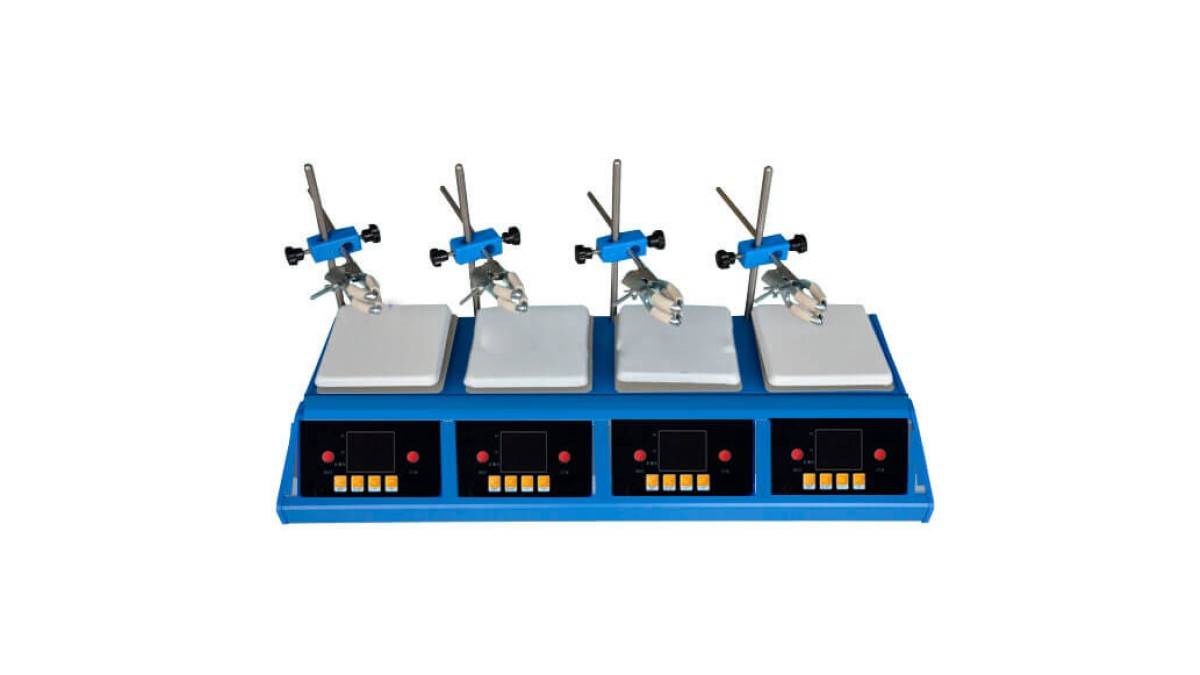
Multiposition Intelligent Digital Display Ceramic Hotplate Stirrer: Best Practices and Applications in 2026
What is it used for in 2026
The Multiposition Intelligent Digital Display Ceramic Hotplate Stirrer is a vital tool in laboratories for efficiently mixing and heating various substances. In 2026, its applications are widespread across chemistry, biology, and material science, primarily due to its ability to provide precise temperature control and stirring capabilities for multiple samples simultaneously. This equipment enhances workflow efficiency, ensuring reproducibility and accuracy in experiments.
History and evolution of the technology
The evolution of hotplate stirrers has seen significant advancements over the years. Originally, hotplate stirrers were basic devices with limited control over temperature and stirring speed. However, with the development of digital technology and improved materials, modern multiposition stirrers like the ones in this family now offer digital displays, PID temperature control, and enhanced safety features. This evolution has revolutionized laboratory processes, allowing for more complex and controlled experiments.
How to use it step by step
Using the Multiposition Intelligent Digital Display Ceramic Hotplate Stirrer involves several steps:
- Setup: Place the stirrer on a stable surface, ensuring it is level and free from clutter.
- Connection: Connect the device to a suitable power source.
- Material Preparation: Prepare the samples to be heated or mixed in appropriate containers compatible with heating.
- Temperature Setting: Use the digital display to set the desired temperature and stirring speed according to the experimental requirements.
- Start Operation: Turn on the device, and ensure that the samples are properly mixed and heated as per the set parameters.
- Monitoring: Regularly check the digital display for accurate readings and make necessary adjustments.
- Shutdown: Once experiments are complete, turn off the device and allow it to cool before cleaning.
Best techniques and protocols
In 2026, best practices involve calibrating the device before use to ensure accuracy. Regularly checking the stirring speed and temperature settings is crucial for obtaining reliable results. Utilizing a PID control system enhances the precision of temperature settings. Additionally, it's recommended to use containers that are suitable for the temperature ranges to prevent any accidents or damage to the equipment.
Practical applications by laboratory type
Different types of laboratories utilize Multiposition Intelligent Digital Display Ceramic Hotplate Stirrers for various applications:
- Chemical Laboratories: For reactions requiring precise temperature control during mixing.
- Biological Laboratories: For heating media and mixing samples in microbiological studies.
- Material Science: For preparing samples requiring controlled heating and mixing.
Regulations, standards and certifications
Laboratories using these devices must adhere to safety regulations and standards such as those set by the ISO and ASTM. Certification for electrical safety and compliance with chemical handling regulations are also crucial. Ensuring that the equipment is certified helps in maintaining laboratory safety and quality in research outcomes.
Comparison with alternative technologies
While traditional hotplate stirrers are still in use, the multiposition intelligent models offer significant advantages. They provide better temperature control, are capable of handling multiple samples simultaneously, and reduce the risk of contamination. Unlike mechanical stirrers, they operate silently and offer a greater degree of precision.
Comparison of available models
| Model | Best for | Key specs | Recommended use case |
|---|---|---|---|
| YR02953 | High precision mixing and heating | Temperature: Rt -380°C, Speed: 100-1800 RPM | Ideal for chemical reactions requiring precise control. |
| YR02954 | Versatile laboratory applications | Temperature: Rt -380°C, Speed: 100-1800 RPM | Great for diverse mixing tasks in various experiments. |
| YR02955 | Multiple sample handling | Temperature: Rt -380°C, Speed: 100-1800 RPM | Best for multi-sample analysis in research. |
| YR02947 | Small scale reactions | Temperature: Ambient to 400°C, Speed: 0-2000 RPM | Efficient for small batch reactions and experiments. |
| YR02948 | Controlled heating for sensitive samples | Temperature: Ambient to 400°C, Speed: 0-2000 RPM | Best practice for heating delicate materials. |
| YR02949 | General laboratory use | Specifications vary | Commonly used in educational and research institutions. |
Common mistakes and how to avoid them
Common mistakes while using hotplate stirrers include:
- Not calibrating the device before use, leading to inaccurate results.
- Overheating samples, which can alter their properties.
- Using inappropriate containers that are not heat-resistant.
- Neglecting to monitor the mixture, which could lead to spills or overheating.
To avoid these mistakes, ensure calibration is done regularly, choose suitable containers, and maintain a routine check on the mixing process.
Maintenance, calibration and good practices 2026
Regular maintenance of hotplate stirrers includes cleaning the surfaces after each use, checking the electrical connections, and ensuring that the temperature sensors are functioning correctly. Calibration should be performed at least once a month to confirm the accuracy of temperature and speed settings. Good practices include keeping the equipment dry, storing it in a dust-free environment, and following the manufacturer’s guidelines for usage.
Cost-benefit analysis 2026
Investing in Multiposition Intelligent Digital Display Ceramic Hotplate Stirrers offers numerous benefits, including increased efficiency, improved safety, and better experimental outcomes. While the initial cost may be higher than traditional stirrers, the long-term benefits of time savings, accuracy, and versatility make them a cost-effective solution in the long run.
Frequently asked questions
What features should I look for in a hotplate stirrer?
Key features include temperature control range, stirring speed variability, digital display for ease of use, and safety features to prevent overheating and spills.
Can I use any type of container with a hotplate stirrer?
No, only use containers that are rated for high temperatures and are compatible with magnetic stirring to ensure safety and effectiveness.
How often should I calibrate my hotplate stirrer?
Calibration should be performed at least once a month or more frequently if the device is used intensively or in critical applications.
What maintenance steps are necessary for optimal performance?
Regular cleaning, checking electrical connections, and ensuring that the temperature sensors are functional are essential maintenance steps.
How do I choose the right model for my laboratory?
Consider the specific applications, the number of samples you will work with, and the required temperature and stirring speed ranges to determine the best model for your needs.
Is it safe to leave the hotplate stirrer unattended?
It is not recommended to leave the device unattended while in operation. Regular monitoring is crucial to ensure safety and prevent accidents.
How can I request a quote for the equipment?
You can easily request a quote by contacting our sales team or visiting our product catalog for more information.
If you are looking for a fusion of innovation and quality, you have come to the right place. At Kalstein, we offer you the luxury of exploring our exclusive catalog of laboratory equipment. We manufacture every device to the highest standards of excellence. Our intuitive and seamless online purchasing channels are designed for your convenience, securing the most competitive prices. Hesitate no longer — we bring science to life, it is time to become part of our community.