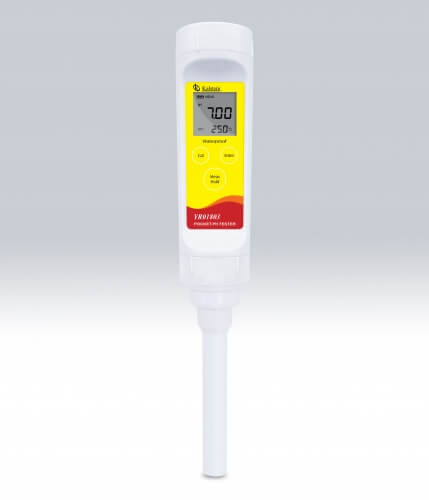
Portable pH Meters: Applications in Research, Biotechnology and Academia 2026
Portable pH meters are essential tools in various laboratory settings, enabling professionals to measure the acidity or alkalinity of solutions with precision and ease. In 2026, these devices continue to evolve, integrating advanced technologies that enhance their usability and accuracy, making them indispensable in research, biotechnology, and academic laboratories.
What is it used for in 2026
In 2026, portable pH meters are utilized across multiple sectors, including research, biotechnology, and academic institutions. Their primary function is to provide accurate pH measurements in various solutions and samples. Laboratory professionals depend on these devices for:
- Monitoring the pH of biological samples to ensure optimal conditions for experiments.
- Testing soil and water quality in environmental studies.
- Quality control in food and beverage industries.
- Calibration of chemical compounds in pharmaceutical research.
History and evolution of the technology
The evolution of pH measurement technology dates back to the 1930s with the development of glass electrodes. Over the decades, the introduction of portable designs has transformed laboratory workflows, allowing researchers to conduct field measurements without the need for bulky equipment. The late 20th century saw the incorporation of digital displays, automatic temperature compensation, and multi-point calibration, enhancing accuracy and user-friendliness. Today, portable pH meters are compact, feature-rich devices that cater to diverse laboratory needs.
How to use it step by step
Using a portable pH meter involves several key steps:
- Prepare the meter: Turn on the device and ensure it is calibrated according to the manufacturer's instructions.
- Select buffer solutions: Choose the appropriate buffer solutions for calibration based on the expected pH range of your samples.
- Calibration: Calibrate the meter using 1 to 3 points, as required. Immerse the electrode in the buffer solution and allow the reading to stabilize.
- Measure the sample: Rinse the electrode with distilled water, then immerse it in the sample solution. Wait for the reading to stabilize before recording the pH value.
- Clean the electrode: After use, clean the electrode thoroughly to prevent contamination of future samples.
Best techniques and protocols
To ensure accurate pH measurements, adhere to the following techniques and protocols:
- Always calibrate the pH meter before each use to maintain accuracy.
- Use fresh buffer solutions for calibration and store them properly to avoid contamination.
- Allow the pH meter to equilibrate in the sample for several seconds before taking a reading.
- Use appropriate electrode types for specific sample types (e.g., flat-surface electrodes for semi-solids).
- Document all measurements and calibrations for traceability.
Practical applications by laboratory type
Different laboratory types leverage portable pH meters for various applications:
Research Laboratories
Researchers use portable pH meters to monitor pH levels in experiments involving biochemical reactions, ensuring optimal conditions for sample integrity.
Biotechnology Laboratories
In biotechnology, these meters help in the formulation of media for cell cultures, where precise pH control is crucial for the growth of microorganisms.
Academic Institutions
Educational laboratories utilize portable pH meters for teaching purposes, allowing students to understand the principles of pH measurement and its implications in scientific experiments.
Regulations, standards and certifications
Laboratories must adhere to specific regulations and standards concerning pH measurement equipment. Compliance with ISO standards and ASTM guidelines ensures the reliability and accuracy of pH measurements. Additionally, devices may need certifications from organizations like CE, ensuring they meet safety and performance criteria.
Comparison with alternative technologies
While portable pH meters are widely used, alternative technologies include:
- Benchtop pH meters: Typically more accurate and stable, these are better suited for laboratory environments.
- pH indicator strips: Though easier to use, they are less accurate and provide a limited range of pH values.
Portable pH meters stand out due to their versatility and precision, making them the preferred choice for both fieldwork and laboratory analysis.
Comparison of available models
| Model | Best for | Key specs | Recommended use case |
|---|---|---|---|
| YR01803 | High precision measurements | Accuracy: ±0.01 pH, Calibration: 1-3 points | Measuring small volume samples in research. |
| YR01804 | Outdoor applications | Manual temperature compensation, BNC connector | Environmental testing and field measurements. |
| YR01800 | Compact measurements | Resolution: 0.01 pH, IP57 rated | Portable use in various experimental setups. |
| YR01800-1 | Flexible applications | Mini design, automatic calibration, CR2032 battery | Classroom settings and hands-on learning. |
| YR01802 | High precision in semi-solids | Dual LCD screen, accuracy: ±0.01 pH | Measurements in food and cosmetic industries. |
| YR01802-1 | Advanced pH monitoring | IP57 rated, suitable for various environments | Research and product development. |
Common mistakes and how to avoid them
Laboratory professionals can avoid common mistakes by following these best practices:
- Neglecting calibration: Always calibrate before use to ensure measurement accuracy.
- Improper cleaning: Rinse electrodes between samples to avoid cross-contamination.
- Ignoring temperature effects: Use temperature compensation features to improve accuracy.
Maintenance, calibration and good practices 2026
Maintaining portable pH meters is crucial for optimal performance. Key practices include:
- Regularly calibrate the device using fresh buffer solutions.
- Store the electrode according to manufacturer guidelines to prevent drying out.
- Inspect for signs of damage or wear and replace components as needed.
Cost-benefit analysis 2026
When considering the investment in a portable pH meter, weigh the cost against the benefits:
- Initial cost: Evaluate the price point of models and their features versus budget.
- Long-term savings: Higher-quality meters may result in fewer replacements and repairs.
- Increased efficiency: Portable meters streamline workflow, saving time and enhancing productivity.
Frequently asked questions
How do I choose the right portable pH meter for my laboratory?
Consider the range of pH values you need to measure, the types of samples you will test, and whether automatic calibration features are important for your applications.
What maintenance is required for portable pH meters?
Regular calibration, cleaning the electrode, and proper storage are essential for maintaining performance and prolonging the device's lifespan.
Can portable pH meters be used in field conditions?
Yes, many portable pH meters are designed for field use, featuring waterproof ratings and rugged designs. Ensure you select a model suitable for outdoor conditions.
What is the difference between manual and automatic temperature compensation?
Manual temperature compensation requires the user to input the temperature, while automatic compensation adjusts the readings based on the temperature detected by the device.
How often should I calibrate my portable pH meter?
It is advisable to calibrate your pH meter before each use, especially if you are measuring significantly different samples.
What are the common errors in pH measurement?
Common errors include not calibrating properly, using dirty electrodes, and failing to consider temperature effects on readings.
Where can I find high-quality portable pH meters?
Explore reputable suppliers for laboratory equipment to find a range of high-quality portable pH meters that suit your needs.
If you are looking for a fusion of innovation and quality, you have come to the right place. At Kalstein, we offer you the luxury of exploring our exclusive catalog of laboratory equipment. We manufacture every device to the highest standards of excellence. Our intuitive and seamless online purchasing channels are designed for your convenience, securing the most competitive prices. Hesitate no longer — we bring science to life, it is time to become part of our community.