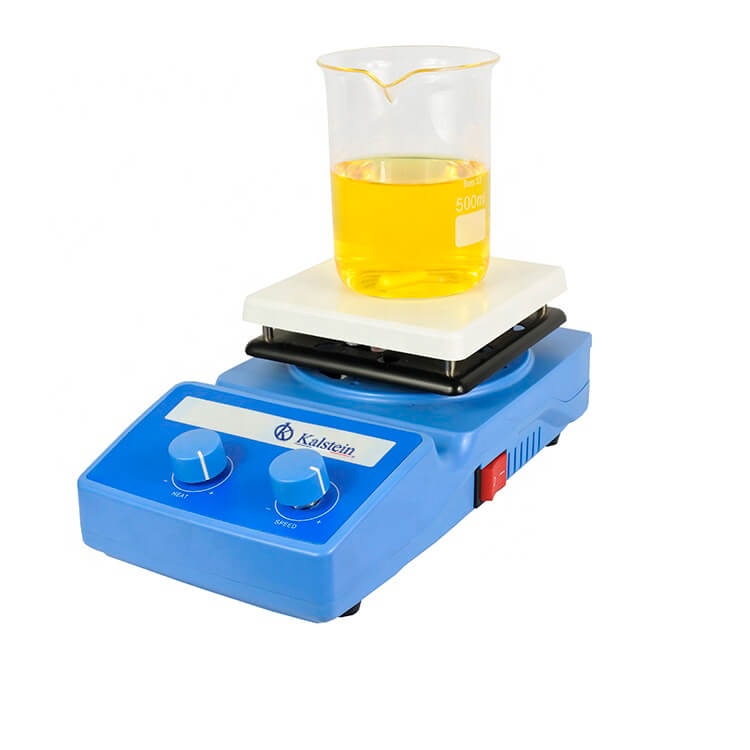
Predictive Maintenance and Recommended Calibration for Hotplate Stirrer Models
In the world of laboratory equipment, maintaining optimal performance is crucial for achieving reliable results. Specifically, in units like analog ceramic top hotplate stirrers, predictive maintenance and regular calibration play vital roles in extending equipment lifespan and ensuring accuracy. This article delves into the importance of these practices in the context of several models, namely YR02933, YR02934, YR02935, and YR02936.
Understanding Predictive Maintenance in Laboratory Context
Predictive maintenance refers to the practice of monitoring equipment performance and using data analytics to predict when maintenance should be performed. This approach minimizes unplanned downtime and optimizes the operational efficiency of devices such as hotplate stirrers. For instance, using temperature data and performance metrics, technicians can determine whether the YR02934 model requires servicing before a failure occurs, thus avoiding costly interruptions.
Recommended Calibration Practices for Hotplate Stirrers
Calibration is essential for ensuring that laboratory equipment operates within specified tolerances. Regular calibration of hotplate stirrers helps maintain accuracy in temperature control and mixing speeds. For models like YR02935, which features PID temperature control, regular calibration checks can confirm that the temperature readings align with the calibrated thermocouple, ensuring experiments yield repeatable results.
Benefits of Predictive Maintenance
Implementing predictive maintenance leads to various benefits, including reduced operational costs, improved safety, and increased equipment reliability. For example, the YR02936 model, known for its broad temperature range and digital control features, can benefit from predictive maintenance by monitoring its heating elements and detecting any discrepancies before they lead to failure.
Calibration Intervals for Hotplate Stirrers
Establishing calibration intervals is essential for maintaining the accuracy of hotplate stirrers. Generally, it is recommended to perform calibration at least once every six months, depending on usage frequency and application type. For example, a laboratory using the YR02933 model for critical assays would benefit from more frequent checks, ensuring that results remain reliable.
Failure Modes and Their Impact on Performance
Understanding potential failure modes in hotplate stirrers is crucial for implementing an effective predictive maintenance strategy. Common issues include temperature control failures and mechanical wear of stirring components. By proactively monitoring the YR02934 model's performance, labs can take action to replace or repair parts before a complete failure occurs, thus maintaining workflow continuity.
Key Performance Indicators for Maintenance Strategies
Establishing key performance indicators (KPIs) helps gauge the effectiveness of maintenance strategies. Metrics such as Mean Time Between Failures (MTBF) and Mean Time to Repair (MTTR) are critical for assessing the reliability of hotplate stirrers like YR02935. By tracking these KPIs over time, facilities can refine their maintenance approaches to achieve optimal performance.
Common Mistakes and How to Avoid Them
When it comes to predictive maintenance and calibration, several common pitfalls can hinder laboratory efficiency. One significant mistake is failing to document maintenance activities, which can lead to inconsistent performance and untracked wear. Ensure that all maintenance tasks for models like YR02936 are recorded, allowing for more informed future decisions.
Comparison of Available Models
| Model Code | Temperature Control | Max Temperature (°C) | Best Use Case |
|---|---|---|---|
| YR02933 | Manual Control | 300 | General Laboratory Use |
| YR02934 | PID Control | 325 | Chemical Reactions |
| YR02935 | PID Control | 380 | Biological Assays |
| YR02936 | PID Control | 400 | High-Temperature Applications |
Frequently Asked Questions
What are the recommended calibration intervals for hotplate stirrers in laboratories?
It is advised to calibrate hotplate stirrers at least every six months, depending on usage. For example, if using the YR02935 model for critical assays, consider more frequent calibration to maintain precise temperature control.
How does predictive maintenance improve the performance of hotplate stirrers?
Predictive maintenance leverages data analytics to foresee failures before they occur, improving uptime and reducing repair costs. For instance, monitoring the YR02934 model allows timely interventions to maintain optimal performance.
What are common failure modes for hotplate stirrers like YR02936?
Common failure modes include temperature control discrepancies and stirring motor issues. By monitoring performance metrics, labs can detect these issues in models like YR02936 early, preventing total equipment failure.
Which hotplate stirrer model is best for chemical reactions?
The YR02934 model, with its PID temperature control system and maximum temperature of 325°C, is optimal for chemical reactions, ensuring consistency and safety in laboratory processes.
What KPIs should be monitored for hotplate stirrers?
Key Performance Indicators include Mean Time Between Failures (MTBF) and Mean Time to Repair (MTTR). Monitoring these for models like the YR02935 helps refine maintenance strategies and enhance reliability.
How can I enhance the lifespan of my hotplate stirrer?
Regular calibration and predictive maintenance can significantly enhance the lifespan of hotplate stirrers. For example, frequent checks on the YR02933 model can help identify issues before they lead to significant breakdowns.
Why is documentation important in maintenance practices for laboratory equipment?
Documentation ensures consistent performance tracking and allows for informed decision-making regarding maintenance. For hotplate stirrers like YR02936, maintaining thorough records can prevent unplanned downtime.
What cost-saving measures can be derived from predictive maintenance in hotplate stirrers?
Predictive maintenance reduces unplanned downtime, which can lead to significant savings in repair costs and operational disruptions. Implementing this with models like YR02934 can improve overall lab efficiency.
If you are looking for a fusion of innovation and quality, you have come to the right place. At Kalstein, we offer you the luxury of exploring our exclusive catalog of laboratory equipment. We manufacture every device to the highest standards of excellence. Our intuitive and seamless online purchasing channels are designed for your convenience, securing the most competitive prices. Hesitate no longer — we bring science to life, it is time to become part of our community.