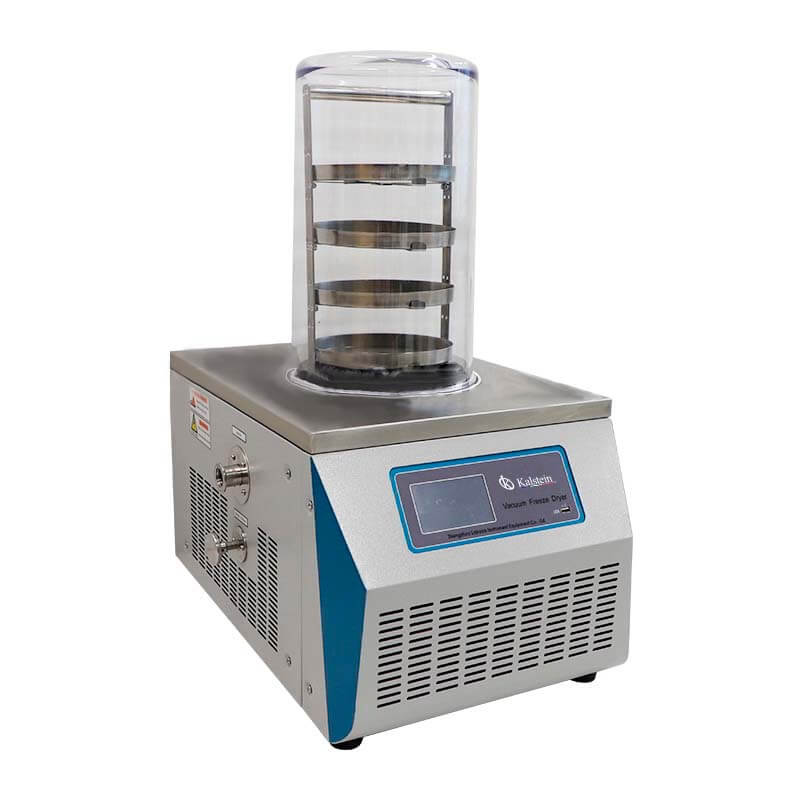
Maximizing ROI and Cost-Benefit Analysis for Benchtop Laboratory Freeze Dryers
In the realm of laboratory equipment, benchtop freeze dryers, or lyophilizers, play a pivotal role in preserving samples for various applications ranging from pharmaceuticals to biological research. These sophisticated devices not only require significant upfront investment but also ongoing operational costs. Therefore, understanding the return on investment (ROI) and conducting a thorough cost-benefit analysis becomes essential for laboratories aiming to maximize their financial resources while ensuring high-quality results.
Understanding ROI in Laboratory Freeze Dryers
ROI in the context of laboratory freeze dryers refers to the financial return gained from the investment made in these machines. This is calculated by comparing the net profit gained from using the freeze dryer against the initial cost of the equipment. For example, if a laboratory invests $2,000 in a model like YR05186 and subsequently saves $500 annually on sample preservation costs, the payback period can be calculated to determine the efficiency of the investment.
Key Factors Influencing Cost-Benefit Analysis
When evaluating the cost versus benefit of laboratory freeze dryers, several factors come into play:
- Initial Investment Costs: The purchase price of the freeze dryer models varies. The YR05186 has a price of $1,780, whereas the YR05189 is priced at $2,596.
- Operating Costs: This includes electricity, maintenance, and any consumables used during operation. Models with more efficient energy consumption may present lower operating costs.
- Sample Preservation Quality: The ability of a freeze dryer to maintain sample integrity can save costs related to re-testing and quality assurance, making it a vital aspect of the analysis.
Comparison of Available Models
| Model | CAPEX (USD) | Cost per Test | Payback (months) | Recommended Scenario |
|---|---|---|---|---|
| YR05186 | $1,780 | $5 | 3.6 | Pharmaceutical applications |
| YR05187 | $1,943 | $6 | 4.2 | Biological research |
| YR05188 | $2,433 | $7 | 4.8 | Food industry |
| YR05189 | $2,596 | $8 | 5.2 | Laboratory R&D |
| YR05189-1 | $2,433 | $7.5 | 4.5 | Custom experiments |
Common Mistakes and How to Avoid Them
One common mistake laboratories make is underestimating the operational costs associated with freeze dryers. It is crucial to take into account both maintenance and energy use when calculating the total cost of ownership. Additionally, laboratories often overlook the potential savings from sample preservation, which can skew the cost-benefit analysis. A thorough evaluation of operational data and potential savings should be conducted to gain a clearer financial picture.
Deep Dive into Cost-Benefit Metrics
The cost-benefit analysis can be quantified through various metrics. For instance, the cost per test provides insights into the efficiency of each model. By calculating this metric, laboratories can compare the economic viability of using different freeze dryer models.
| Model | Cost per Test (USD) | Annual Cost Savings (USD) | Net Gain (USD) |
|---|---|---|---|
| YR05186 | $5 | $500 | $2,500 |
| YR05187 | $6 | $450 | $2,200 |
| YR05188 | $7 | $400 | $1,800 |
| YR05189 | $8 | $350 | $1,400 |
| YR05189-1 | $7.5 | $375 | $1,500 |
Impact of Model Features on ROI
Each model brings unique features that can significantly impact ROI. For example, YR05186 includes a transparent Plexiglas chamber that allows for real-time monitoring, which can reduce time lost in experiments and increase throughput. In contrast, the YR05189 offers a manual press style, which may require more operator time and influence labor costs associated with its operation.
Energy Efficiency and Sustainability Considerations
Energy efficiency is paramount in the cost-benefit analysis of freeze dryers. Models with lower power consumption will lead to reduced electricity costs over their lifespan. YR05186, for instance, operates at 700W, while others may have similar or higher ratings. Laboratories should evaluate the kWh per run to understand their environmental impact and operational costs, as well as to align with sustainability goals.
Conclusion: Making Informed Decisions
By thoroughly evaluating the ROI and conducting a comprehensive cost-benefit analysis, laboratories can make informed decisions regarding their investment in benchtop laboratory freeze dryers. This approach not only aids in selecting the right equipment but also enhances overall operational efficiency and sustainability.
Frequently Asked Questions
What factors should be considered for ROI on benchtop laboratory freeze dryers?
When analyzing ROI for benchtop laboratory freeze dryers, factors such as initial investment costs, operating costs, and sample preservation quality should be considered. For instance, the YR05186, with a price of $1,780, provides an efficient alternative for labs focused on cost savings.
How can I calculate the payback period for a laboratory freeze dryer?
The payback period for a laboratory freeze dryer can be determined by dividing the initial investment by the annual net savings. For example, if you invest in the YR05187 model, costing $1,943, and save $450 annually, the payback period would be approximately 4.3 years.
Which benchtop freeze dryer model is best for food preservation?
The YR05188 model is particularly suited for food preservation, given its ability to maintain quality over time. It has a capacity of 1.2 liters and is priced at $2,433, making it an effective choice for laboratories focusing on the food industry.
What operational costs are associated with laboratory freeze dryers?
Operational costs include energy consumption, maintenance, and any consumables necessary for the freeze drying process. For instance, models like the YR05189 have a higher initial investment but may save on operational costs over time due to greater efficiency.
How is sample preservation quality measured in freeze dryers?
Sample preservation quality can be measured by evaluating the structural integrity and biological activity post-freeze drying. Models like YR05186 offer advanced monitoring features, which contribute to higher quality outcomes.
What are common mistakes when analyzing the cost of freeze dryers?
Common mistakes include underestimating ongoing operational costs and not accounting for potential savings from sample preservation. A thorough cost-benefit analysis that includes all variables is essential for accurate assessments.
How do energy efficiency standards impact freeze dryer selection?
Energy efficiency standards significantly influence freeze dryer selection, affecting both operational costs and environmental impact. Choosing models like YR05186, which optimize power usage, can enhance sustainability efforts while reducing costs.
What is the typical lifespan of a benchtop laboratory freeze dryer?
The typical lifespan of a benchtop laboratory freeze dryer can vary, but most high-quality models like the YR05189 can last over a decade with proper maintenance, making them a worthwhile investment for laboratories.
If you are looking for a fusion of innovation and quality, you have come to the right place. At Kalstein, we offer you the luxury of exploring our exclusive catalog of laboratory equipment. We manufacture every device to the highest standards of excellence. Our intuitive and seamless online purchasing channels are designed for your convenience, securing the most competitive prices. Hesitate no longer — we bring science to life, it is time to become part of our community.