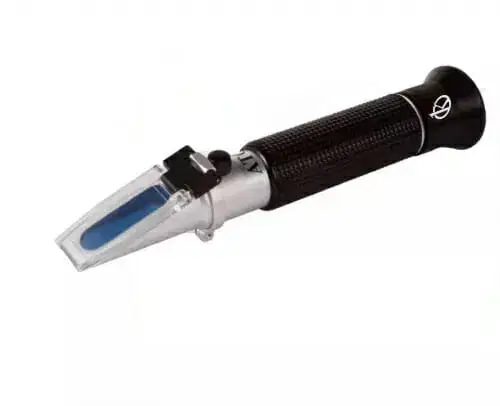
Understanding ROI and Cost-Benefit Analysis for Salinity Refractometers
Salinity refractometers play a vital role in various laboratory applications, particularly in marine industries and clinical laboratories. By providing direct readings of salinity and specific gravity, these instruments aid in quality control processes. This article delves into the cost-benefit analysis and return on investment (ROI) associated with different models of salinity refractometers, such as YR05887, YR05888, YR05913, and YR05914, enabling professionals to make informed purchasing decisions.
Salinity Refractometers and Their Importance in Laboratory Settings
Salinity refractometers are essential tools for determining the concentration of salt in water and saline solutions. They are widely used in laboratories for various purposes, including marine biology research, aquaculture, and clinical testing. Understanding the ROI on these instruments is crucial for laboratory managers looking to optimize operational costs while ensuring accurate measurements.
Key Factors Influencing ROI for Salinity Refractometers
Several factors influence the ROI of salinity refractometers, such as initial investment costs, maintenance expenses, and the potential for increased efficiency in operations. Evaluating these aspects helps determine the financial viability of purchasing a specific model.
Initial Investment Costs
The initial investment for salinity refractometers can vary significantly based on the model and its features. For instance, the YR05887 provides a comprehensive measurement range and built-in automatic temperature compensation (ATC), which enhances its operational effectiveness, making it a worthwhile investment despite a higher upfront cost.
Operational Efficiency and Cost Savings
Salinity refractometers like the YR05888 offer notable savings over time due to their accuracy and quick result delivery. By reducing the need for repeat tests, laboratories can save on labor and materials, improving overall productivity and impacting ROI positively.
Comparison of Available Models
| Model | Measurement Range | Price (USD) | Best For |
|---|---|---|---|
| YR05887 | 2-4% (20-40 ppt), 1.015-1.030 SG | 9.50 | Marine quality control |
| YR05888 | 0-4% (0-40 ppt), 1.000-1.030 SG | 9.50 | Aquaculture |
| YR05913 | 2-4% (20-40 ppt), 1.015-1.030 SG | 9.50 | Research laboratories |
| YR05914 | 0-4% (0-40 ppt), 1.000-1.030 SG | 9.50 | Clinical testing |
Common Mistakes and How to Avoid Them
When investing in salinity refractometers, common mistakes include underestimating the importance of calibration and failing to consider operational compatibility. Regular calibration is essential for accuracy, and selecting a model that integrates seamlessly with existing laboratory equipment can prevent future complications.
Quantitative Breakdown of Cost-Benefit Analysis
Understanding the financial aspects of salinity refractometers can assist in making informed decisions. Below is a quantitative breakdown of expected costs versus benefits.
| Model | CAPEX (USD) | Cost per Test (USD) | Payback Period (Months) |
|---|---|---|---|
| YR05887 | 9.50 | 0.20 | 3 |
| YR05888 | 9.50 | 0.15 | 2.5 |
| YR05913 | 9.50 | 0.18 | 2.8 |
| YR05914 | 9.50 | 0.22 | 3.2 |
Frequently Asked Questions
What is the ROI for using YR05887 salinity refractometer in clinical labs?
The ROI for using the YR05887 salinity refractometer can be significant due to its precision and reliability. Labs can expect a payback period of around 3 months based on an average test cost of $0.20, leading to improved operational efficiency.
How does YR05888 improve productivity in marine quality control?
The YR05888 model enhances productivity in marine quality control by providing quick and accurate measurements, reducing the time spent on testing. Its low cost per test of $0.15 contributes to an overall more efficient workflow.
Which model is best for aquaculture operations and why?
The YR05888 is best for aquaculture operations due to its specific measurement range of 0-4% salinity, allowing precise monitoring of saline levels which is crucial for aquatic life health.
What costs should be considered when evaluating salinity refractometers?
Costs to consider include the initial purchase price, calibration expenses, and ongoing maintenance. Models like YR05913 offer a competitive cost per test, making them a cost-effective choice over time.
How does regular calibration affect the ROI of refractometers?
Regular calibration significantly affects the ROI of refractometers like the YR05914 by ensuring measurement accuracy, which helps avoid costly errors and re-tests. This ultimately leads to operational savings and efficiency.
What features of YR05914 enhance its value in clinical testing?
The YR05914 features automatic temperature compensation and a wide measurement range, which enhance its value in clinical testing by providing reliable and reproducible results critical for patient care.
How can I calculate the payback period for salinity refractometers?
The payback period for salinity refractometers can be calculated by dividing the initial investment by the monthly savings achieved through reduced testing time and lower materials costs. For example, YR05887 may have a payback period of 3 months.
Why is the cost per test important in salinity measurement?
The cost per test is critical in salinity measurement as it directly impacts the overall operational budget of a laboratory. Maintaining a low cost per test, as seen in YR05888 at $0.15, can enhance profitability and efficiency.
If you are looking for a fusion of innovation and quality, you have come to the right place. At Kalstein, we offer you the luxury of exploring our exclusive catalog of laboratory equipment. We manufacture every device to the highest standards of excellence. Our intuitive and seamless online purchasing channels are designed for your convenience, securing the most competitive prices. Hesitate no longer — we bring science to life, it is time to become part of our community.