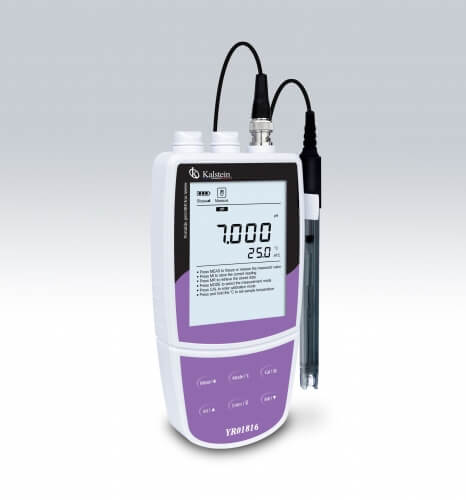
Understanding Site Requirements and Environmental Conditions for the YR01817-3 Portable Ammonium Ion Meter
The YR01817-3 Portable Ammonium Ion Meter is a professional-grade device designed to provide accurate readings in various environments. However, to maximize its performance and longevity, it is essential to understand the site requirements and environmental conditions under which it operates. In this article, we'll explore the necessary conditions to ensure optimal functionality of the YR01817-3.
Key Environmental Conditions
The operational environment significantly influences the accuracy and reliability of the YR01817-3. Here are the critical factors to consider:
- Temperature Range: The YR01817-3 functions best within a temperature range of 0 to 105 °C (32 to 221 °F). Ensure that the device is not exposed to extreme temperatures that could affect its readings.
- Humidity: Relative humidity levels should ideally be kept between 20% and 80%. Excessive humidity can lead to condensation that may interfere with electronic components.
- Vibration: Ensure the meter is placed on a stable surface to avoid vibrations which can impact readings. Avoid locations near heavy machinery that may cause constant vibrations.
- Electromagnetic Interference (EMI): Position the YR01817-3 away from strong electromagnetic fields generated by motors or other electronic devices to prevent interference.
Site Preparation Checklist
Preparing the site for the YR01817-3 is crucial to ensure its proper functioning:
| Condition | Requirement |
|---|---|
| Temperature | 0 to 105 °C (32 to 221 °F) |
| Humidity | 20% to 80% |
| Vibration | Stable surface required |
| EMI | Avoid strong electromagnetic sources |
| Clearances | Ensure adequate space around the device for ventilation |
| Power Supply | DC 5V adapter or 3 AA batteries |
Technical Specifications of the YR01817-3
To further understand the YR01817-3, let's look at its technical specifications:
| Specification | Details |
|---|---|
| Model | YR01817-3 |
| Ion Concentration Range | 5 × 10⁻⁶ to 1 M, 1.8 to 35500 ppm |
| Accuracy | ± 0.5% FS |
| Calibration Points | 2 to 5 points |
| Measurement Units | ppm, mg/L, mol/L |
| Power Supply | 3 AA batteries or DC 5V adapter |
| Memory | Stores up to 500 data sets |
Best Practices for Using the YR01817-3
To maintain the YR01817-3's performance, adhere to the following best practices:
- Regular Calibration: Schedule calibration every 30 days to ensure accuracy. Follow manufacturer instructions for calibration procedures.
- Proper Storage: When not in use, store the device in a protective case to prevent damage from environmental factors.
- Data Transfer: Utilize the USB interface for data transfer to ensure that results are documented and analyzed as needed.
- Battery Management: Monitor battery levels and replace them promptly to prevent interruptions during measurements.
Common Challenges and Solutions
Users may encounter several challenges when operating the YR01817-3. Here are common issues and their solutions:
| Symptom | Possible Causes | Solutions |
|---|---|---|
| Device does not power on | Dead batteries or faulty power source | Replace batteries or check power supply |
| Inconsistent readings | Dirty electrode or improper calibration | Clean the electrode and recalibrate |
| Error code E-03 | Calibration error or unstable environment | Recalibrate in a stable environment |
Frequently Asked Questions
What are the optimal environmental conditions for the YR01817-3?
The optimal environmental conditions for the YR01817-3 include a temperature range of 0 to 105 °C (32 to 221 °F) and humidity levels between 20% and 80%. Avoid placing the device in direct sunlight or in areas with heavy vibration.
How often should I calibrate the YR01817-3?
It is recommended to calibrate the YR01817-3 every 30 days to ensure accurate measurements. Regular calibration helps maintain the reliability of the device.
Can the YR01817-3 be used outdoors?
Yes, the YR01817-3 is designed for outdoor applications. However, ensure it is protected from extreme weather conditions and direct sunlight for best performance.
What should I do if I receive an error code on my YR01817-3?
Refer to the user manual for a list of error codes and their meanings. Most common errors can be resolved by recalibrating the device or checking the power supply.
How can I store the YR01817-3 safely?
When not in use, store the YR01817-3 in a protective case to keep it safe from dust, moisture, and impact damage. Ensure it is stored in a stable environment within recommended temperature and humidity levels.
What type of power supply does the YR01817-3 require?
The YR01817-3 can be powered by three AA batteries or a DC 5V adapter. Ensure to check battery levels regularly to avoid interruptions during use.
Conclusion
Understanding the site requirements and environmental conditions for the YR01817-3 Portable Ammonium Ion Meter is vital for achieving accurate measurements and ensuring the longevity of the device. By adhering to the outlined practices and being aware of common challenges, users can enhance their operational efficiency.
If you are looking for a fusion of innovation and quality, you have come to the right place. At Kalstein, we offer you the luxury of exploring our exclusive catalog of laboratory equipment. We manufacture every device to the highest standards of excellence. Our intuitive and seamless online purchasing channels are designed for your convenience, securing the most competitive prices. Hesitate no longer — we bring science to life, it is time to become part of our community.