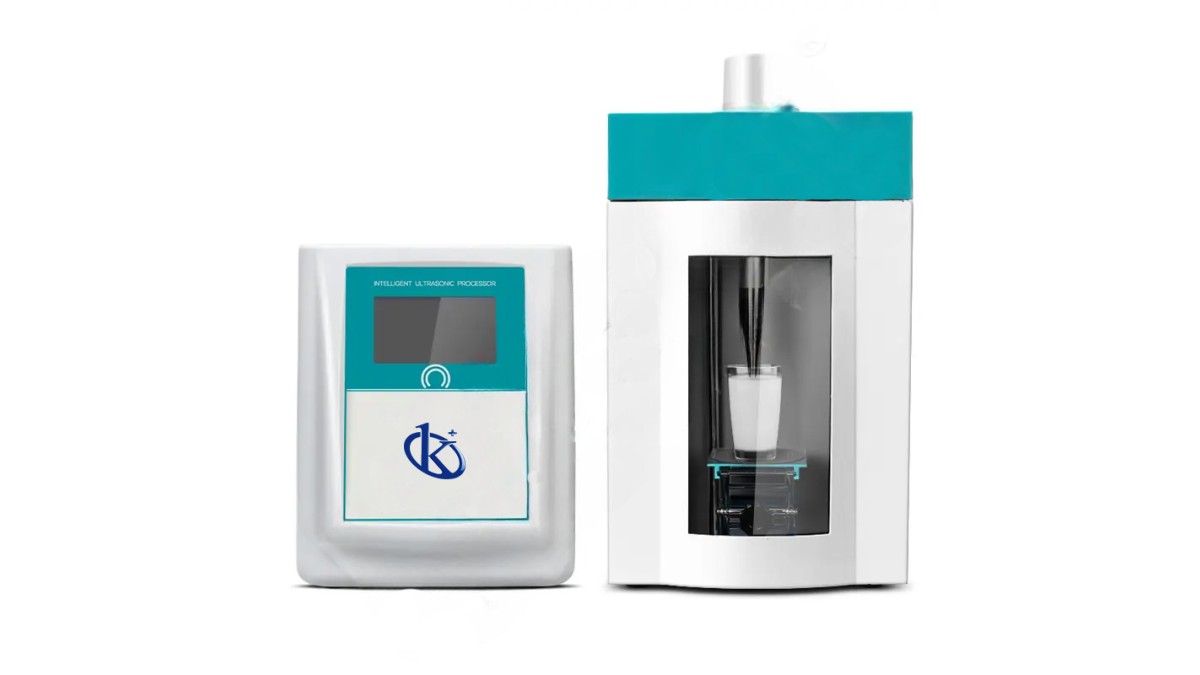
Ultrasonic Homogenizers: Best Practices and Techniques 2026
In the ever-evolving landscape of laboratory equipment, ultrasonic homogenizers have emerged as essential tools for researchers and professionals in various fields. This article delves into the applications, techniques, and best practices for utilizing ultrasonic homogenizers effectively in laboratory settings in 2026.
What is it used for in 2026
Ultrasonic homogenizers are pivotal in many applications, including sample preparation, emulsification, and dispersing solid particulates in liquids. In 2026, they are widely employed in fields such as biotechnology, food science, pharmaceuticals, and materials science. These devices enable the breakdown of cell walls, enhancing the extraction of cellular components, thus facilitating the analysis and synthesis of biological samples.
History and evolution of the technology
The origins of ultrasonic homogenization date back to the early 20th century when researchers began experimenting with ultrasonic waves for various scientific applications. Over the decades, advancements in technology led to the development of more efficient and user-friendly devices. By 2026, ultrasonic homogenizers have evolved to include features such as touch-screen controls, enhanced power capabilities, and real-time monitoring of sample temperatures, making them more reliable and versatile for laboratory use.
How to use it step by step
Using an ultrasonic homogenizer involves several critical steps to ensure optimal performance:
- Prepare your samples: Measure the appropriate amount of liquid and solid samples to ensure that they fit within the homogenizer's mixing capacity.
- Select the appropriate ultrasonic probe: Choose a probe size that matches your sample volume.
- Set the parameters: Input the desired power, frequency, and time settings on the device's control panel.
- Start the homogenization process: Immerse the probe into the sample and initiate the ultrasonic waves.
- Monitor the process: Keep an eye on the temperature and adjust parameters if necessary.
- Collect your samples: Once the process is complete, carefully remove the probe and transfer your homogenized sample for analysis or further processing.
Best techniques and protocols
To achieve the best results with ultrasonic homogenizers, consider the following techniques and protocols:
- Optimize the power settings to match the viscosity and nature of your samples.
- Use pulsing techniques to prevent overheating during the homogenization process.
- Incorporate pre-treatment methods, such as centrifugation or filtration, to prepare samples for better homogenization.
Practical applications by laboratory type
Different laboratory types leverage ultrasonic homogenizers for various applications:
- Biotechnology Labs: Used for cell lysis and nucleic acid extraction.
- Food Science Labs: Emulsifying food products and ensuring uniform distribution of ingredients.
- Pharmaceutical Labs: Formulating drug compounds and improving bioavailability.
- Material Science Labs: Dispersing nanoparticles in solvents for nanocomposite development.
Regulations, standards and certifications
In 2026, laboratories must comply with various regulations and standards when using ultrasonic homogenizers. These include:
- ISO standards for laboratory equipment safety and efficacy.
- FDA regulations for pharmaceutical and food-related applications.
- Good Laboratory Practice (GLP) guidelines to ensure reliable and reproducible results.
Comparison with alternative technologies
Ultrasonic homogenizers are often compared with other homogenization methods, such as mechanical and high-pressure homogenizers. Key differences include:
- Ultrasonic Homogenizers: Provide precise control and are effective for small sample volumes.
- Mechanical Homogenizers: Suitable for larger samples but may require longer processing times.
- High-Pressure Homogenizers: Offer high efficiency for emulsifying but are typically more expensive and complex.
Comparison of available models
| Model | Best for | Key specs | Recommended use case |
|---|---|---|---|
| YR05015 | Sample volumes of 0.1 – 150 ml | Power: 1.5 – 150W, Frequency: 20 – 25 KHz | General laboratory use and for small samples |
| YR05016 | Sample volumes of 0.1 – 300 ml | Power: 2-5 – 250W, Frequency: 20 – 25 KHz | Ideal for slightly larger sample preparations |
| YR05017 | Sample volumes of 0.1 – 500 ml | Power: 10 – 650W, Frequency: 20 – 25 KHz | Versatile for medium-sized samples |
| YR05018 | Sample volumes of 0.1 – 600 ml | Power: 10 – 900W, Frequency: 20 – 25 KHz | Suitable for various laboratory applications |
| YR05019 | Sample volumes of 1 – 1,000 ml | Power: 20 – 1,200W, Frequency: 20 – 25 KHz | Best for larger-scale homogenization |
| YR05020 | Sample volumes of 1 – 1,200 ml | Power: 50 – 1,800W, Frequency: 20 – 25 KHz | Optimal for industrial and large laboratory settings |
Common mistakes and how to avoid them
To maximize the effectiveness of ultrasonic homogenizers, avoid these common mistakes:
- Using incorrect probe sizes for sample volumes.
- Neglecting to monitor temperature, which can affect sample integrity.
- Setting power levels too high, which can lead to sample degradation.
Maintenance, calibration and good practices 2026
Proper maintenance and calibration are essential for reliable performance:
- Regularly clean probes and devices to prevent contamination.
- Calibrate the ultrasonic homogenizer according to manufacturer guidelines.
- Conduct routine checks to ensure that power settings and frequency are accurate.
Cost-benefit analysis 2026
Investing in ultrasonic homogenizers offers significant benefits:
- Enhanced efficiency in sample preparation.
- Improved consistency and quality of results.
- Reduced time and labor costs compared to traditional methods.
Overall, the benefits of using ultrasonic homogenizers far outweigh the initial investment costs, making them a smart choice for laboratories in 2026.
Frequently asked questions
What types of samples can be processed using an ultrasonic homogenizer?
Ultrasonic homogenizers are versatile and can process a wide range of samples, including biological tissues, emulsions, suspensions, and liquid samples with solid particulates.
How do I determine the appropriate power settings for my samples?
The appropriate power settings depend on the viscosity and nature of your samples. Start with lower power and gradually increase to avoid sample degradation.
Can ultrasonic homogenizers be used for high-temperature samples?
Yes, many ultrasonic homogenizers have temperature control features that allow for the processing of high-temperature samples without risking damage to the equipment.
What maintenance practices should I follow for ultrasonic homogenizers?
Regularly clean the probes, calibrate the device as per the manufacturer’s instructions, and perform routine inspections to ensure optimal performance.
How do I choose the right model for my laboratory needs?
Consider factors such as sample volume, required power levels, and specific applications to select the model that best fits your laboratory's needs.
Is there a specific protocol for emulsifying food products?
When emulsifying food products, it is recommended to use pulsing techniques to achieve the desired emulsion stability while preventing overheating.
What are the benefits of ultrasonic homogenizers over traditional homogenization methods?
Ultrasonic homogenizers provide faster processing times, improved consistency, and the ability to process smaller sample volumes compared to traditional methods.
If you are looking for a fusion of innovation and quality, you have come to the right place. At Kalstein, we offer you the luxury of exploring our exclusive catalog of laboratory equipment. We manufacture every device to the highest standards of excellence. Our intuitive and seamless online purchasing channels are designed for your convenience, securing the most competitive prices. Hesitate no longer — we bring science to life, it is time to become part of our community.