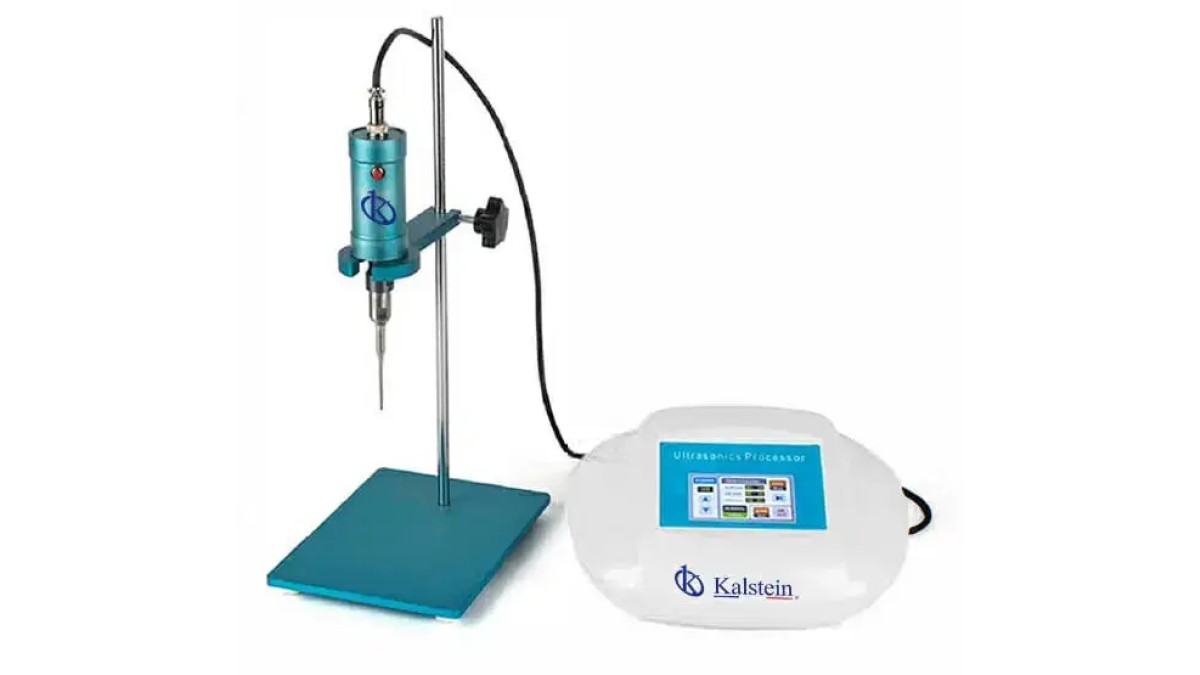
Ultrasonic Homogenizers: Practical Applications and Techniques 2026
Ultrasonic homogenizers, also known as sonicators, are essential tools in laboratories for processing liquids through ultrasonic waves. Using cavitation effects, these devices are capable of emulsifying, dispersing, and homogenizing a wide range of materials, including biological cells and nanoparticles. In this article, we will explore the practical applications, best practices, and techniques for using ultrasonic homogenizers in 2026.
What is it used for in 2026
In 2026, ultrasonic homogenizers are utilized across various fields such as biotechnology, academia, and research laboratories. They are instrumental in:
- Cell Disruption: Efficiently breaking down animal and plant cells for DNA extraction, protein isolation, and other cellular studies.
- Emulsification: Creating stable emulsions for food, pharmaceutical, and cosmetic applications.
- Homogenization: Ensuring uniformity in samples for analytical and experimental procedures.
- Extraction: Enhancing the yield of compounds from plant materials through ultrasonic-assisted extraction.
- Dispersing: Ensuring uniform dispersion of solid particles in liquid media, particularly in nanomaterial synthesis.
- Defoaming: Removing foam from liquids in various industrial processes.
History and evolution of the technology
The use of ultrasonic technology dates back to the early 20th century, primarily in industrial applications. As the technology evolved, scientists began to recognize its potential in laboratory settings. By the 1960s, ultrasonic homogenization became more widespread. The development of digital control systems has significantly improved the precision and reliability of ultrasonic homogenizers, making them an indispensable tool in modern laboratories.
How to use it step by step
Using an ultrasonic homogenizer involves a few critical steps:
- Preparation: Ensure that the sample is properly prepared and contained in a suitable vessel.
- Setup: Connect the ultrasonic homogenizer to the power source and attach the appropriate probe for your application.
- Configuration: Set the desired power, frequency, and duration based on the protocol for your specific application.
- Sonication: Place the probe into the sample, ensuring it is immersed adequately, and start the sonicating process.
- Monitoring: Observe the process to prevent overheating and ensure optimal conditions.
- Post-Processing: Once finished, remove the probe, clean it thoroughly, and analyze the treated sample as required.
Best techniques and protocols
For effective use of ultrasonic homogenizers, consider the following techniques:
- Pulsed Sonication: Use short bursts of ultrasonic energy to minimize heat generation and prevent damage to sensitive samples.
- Temperature Control: Monitor and control the temperature using a suitable coolant to maintain sample integrity.
- Appropriate Probe Selection: Choose the right probe diameter and type based on the sample volume and viscosity.
- Optimization: Adjust power levels and duration based on experimental needs to optimize results.
Practical applications by laboratory type
Biotechnology Labs
In biotechnology, ultrasonic homogenizers are crucial for cell disruption and extraction of biomolecules, enabling researchers to obtain necessary genetic materials for analysis.
Pharmaceutical Labs
Pharmaceutical laboratories use ultrasonic homogenizers for drug formulation and ensuring the uniform distribution of active ingredients in emulsions and suspensions.
Academic Research
In academic settings, these devices facilitate a range of experiments, from studying cellular processes to developing new materials in nanotechnology.
Food Technology
Food scientists employ ultrasonic homogenizers to improve emulsification processes and enhance the texture and stability of food products.
Regulations, standards and certifications
In 2026, laboratories using ultrasonic homogenizers must adhere to various regulations and standards, including:
- ISO 9001: Quality management systems for consistent product quality.
- ISO 13485: Requirements for medical devices, ensuring safety and effectiveness.
- Good Laboratory Practices (GLP): Guidelines that promote the quality and integrity of laboratory studies.
Comparison with alternative technologies
While ultrasonic homogenizers are versatile, alternative technologies include:
- Mechanical Homogenizers: Suitable for larger volumes but may not achieve the same level of cell disruption.
- High-Pressure Homogenizers: Effective for emulsification and homogenization, but can be more costly and complex to operate.
- Blenders and Mixers: Useful for simple mixing tasks but lack the precision offered by ultrasonic methods.
Comparison of available models
| Model | Best for | Key specs | Recommended use case |
|---|---|---|---|
| YR05829 | Cell disruption and emulsification | Power: 5-150 W, Frequency: 19-25 KHz | Perfect for small sample volumes up to 50 ml |
| YR05830 | Homogenization and extraction | Power: 5-250 W, Frequency: 19-25 KHz | Ideal for medium sample volumes up to 100 ml |
| YR05831 | Advanced cell disruption | Power: 5-400 W, Frequency: 19-25 KHz | Best for larger sample volumes up to 300 ml |
| YR05831-op1 | Versatile applications | Power: 5-400 W, Frequency: 19-25 KHz | Great for diverse laboratory needs |
| YR05831-op2 | Cost-effective solutions | Power: 5-400 W, Frequency: 19-25 KHz | Perfect for budget-conscious labs |
| YR05832 | High-capacity processing | Power: 650 W, Frequency: 20-25 KHz | Suitable for large-scale applications up to 1200 ml |
Common mistakes and how to avoid them
To optimize the use of ultrasonic homogenizers, avoid these common mistakes:
- Overheating: Monitor temperatures and use cooling methods to prevent sample degradation.
- Improper Probe Selection: Choose the correct probe size to match the sample volume for effective processing.
- Neglecting Calibration: Regularly calibrate the device to ensure consistent performance and accuracy.
Maintenance, calibration and good practices 2026
To maintain ultrasonic homogenizers, follow these guidelines:
- Regular Cleaning: Clean probes and vessels after each use to prevent contamination.
- Calibration: Periodically calibrate the device as per manufacturer's recommendations to ensure precision.
- Storage: Store the equipment in a clean, dry environment to prolong its lifespan.
Cost-benefit analysis 2026
Investing in ultrasonic homogenizers can yield significant benefits:
- Increased Efficiency: Faster processing times lead to improved laboratory workflows.
- Versatility: Capable of handling various applications, reducing the need for multiple devices.
- Long-term Savings: High-quality results reduce the need for repeat experiments, ultimately saving time and resources.
Frequently asked questions
What factors should I consider when choosing an ultrasonic homogenizer?
When selecting an ultrasonic homogenizer, consider sample volume, required power, and specific applications such as cell disruption or emulsification.
How do I determine the ideal settings for my samples?
Optimize parameters by conducting preliminary tests to assess the effects of power and duration on your specific samples.
Can ultrasonic homogenizers be used for temperature-sensitive materials?
Yes, using pulsed sonication and proper cooling methods can help prevent heat damage to temperature-sensitive materials.
What are the advantages of using ultrasonic homogenizers over mechanical methods?
Ultrasonic homogenizers provide more precise control, improved emulsification, and higher cell disruption efficiency compared to mechanical methods.
How can I maximize the lifespan of my ultrasonic homogenizer?
To extend the lifespan, perform regular maintenance, calibrate the device, and store it properly when not in use.
Is training necessary to operate an ultrasonic homogenizer effectively?
While basic operation is straightforward, understanding specific protocols and optimizing techniques through training can significantly enhance results.
Where can I find more information or request a quote?
You can request a quote and find more information on ultrasonic homogenizers by contacting us at Kalstein.
If you are looking for a fusion of innovation and quality, you have come to the right place. At Kalstein, we offer you the luxury of exploring our exclusive catalog of laboratory equipment. We manufacture every device to the highest standards of excellence. Our intuitive and seamless online purchasing channels are designed for your convenience, securing the most competitive prices. Hesitate no longer — we bring science to life, it is time to become part of our community.