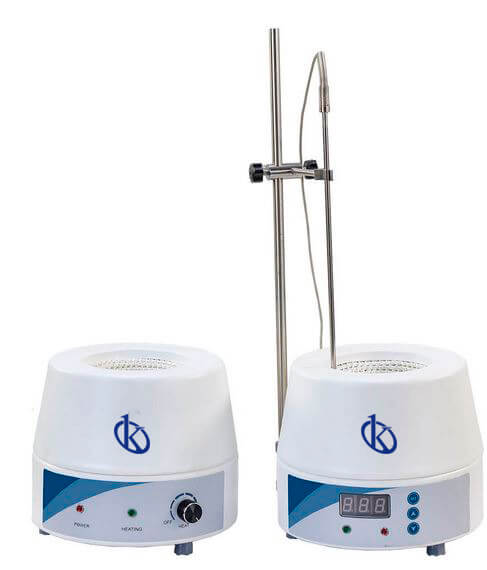
Understanding the Operating Principle and Scientific Foundations of the YR05031 Heating Blanket
The YR05031 heating blanket serves as a crucial tool in numerous laboratory environments, playing a key role in experiments that require precise temperature management. To fully appreciate its functionality, it’s imperative to delve into the underlying scientific principles and operational mechanisms that define this equipment.
Scientific Principles Behind Heating Blankets
The core operation of the YR05031 heating blanket revolves around the principles of thermal conduction and the properties of resistance heating. Thermal conduction is the process through which heat energy is transferred through materials, when a temperature gradient exists. The heating blanket consists of nichrome wire, which acts as the heating element and plays a significant role in the efficient transfer of heat.
The nichrome wire generates heat when an electrical current passes through it due to its resistive properties. This heat is effectively transferred to the blanket’s exterior, which subsequently warms the samples placed on it. The conversion of electrical energy into heat energy by the nichrome wire is described by Joule's law, which states that the heat produced is proportional to the square of the current times the resistance.
Design Choices for Optimal Heat Distribution
The design of the YR05031 heating blanket is tailored to optimize heat distribution for uniform temperature maintenance across its surface. One of the critical design choices includes the even spacing of the nichrome wire throughout the blanket. This ensures that hot and cold spots are minimized, which is vital for experiments that demand precise temperature control.
Moreover, the outer casing is constructed from cold-rolled steel with a surface spray treatment, enhancing durability and heat retention. This material choice also helps in regulating the heat spread, allowing for a more consistent temperature across the blanket.
Advantages of PID Temperature Control
One of the standout features of the YR05031 heating blanket is its precise PID (Proportional-Integral-Derivative) temperature control mechanism. PID control is instrumental in maintaining the desired temperature by continuously calculating an error value as the difference between a desired setpoint and a measured process variable. This computing mechanism adjusts the heating output to minimize the error, ensuring stable and accurate temperature profiles.
With the PID control, users can set specific temperature thresholds, making the YR05031 particularly suitable for high-precision experiments that rely on consistent thermal conditions. The ability to fine-tune the temperature not only enhances the reliability of experimental outcomes but also extends the lifespan of the heating blanket by preventing overheating.
Technical Specifications of the YR05031
| Specification | Details |
|---|---|
| Model | YR05031 |
| Type | Digital |
| Power (W) | 150 / 250 / 350 / 450 / 600 / 800 |
| Max Temperature (°C) | 380 |
| Voltage (V) | 200 – 240V / 50 – 60Hz or 100 – 120V / 50 – 60Hz |
| Weight (kg) | 3 |
| Dimensions (mm) | Ø350 x 250 |
Applications in Various Laboratory Settings
The YR05031 heating blanket is versatile and finds applications across multiple laboratory settings, including clinical, industrial, and educational environments. In clinical settings, its capacity for precise temperature regulation is critical for experiments involving biochemical assays where temperature fluctuations could lead to erroneous results.
In industrial applications, the YR05031 can be used for tasks ranging from material testing to product development, where controlled heating is essential for achieving consistent quality. Moreover, educational institutions utilize the heating blanket for demonstrations and practicals in chemistry and biology labs, where students can observe the effects of temperature on chemical reactions.
Installation and Setup of the YR05031
Unboxing and setting up the YR05031 heating blanket is straightforward, yet certain steps should be adhered to in order to ensure optimal functionality. Upon unboxing, inspect the unit for any possible damage. The next step involves placing the blanket on a stable, even surface away from direct sunlight and moisture.
After positioning the heating blanket, connect it to the appropriate power source. The initial power-up should include a calibration step, where users can set their desired temperature thresholds based on the experimental requirements. It's recommended to allow the unit to run for a few initial cycles to ensure that temperature settings are accurate.
Troubleshooting Common Issues with the YR05031
Equipment Does Not Power On
Common causes for the YR05031 not powering on include improper power connections or a blown fuse. Check the power source and connections first; if they are secure, inspect the fuse for any signs of damage.
Error Code E-03 Appears
This error code often relates to temperature sensor issues. Verify if the sensor is properly connected and functioning; if problems persist, consult the manual for further diagnosis.
Inconsistent Temperature Readings
Inconsistent readings can stem from a faulty PID control configuration or sensor misalignment. Ensure that your PID settings are correctly inputted, and check the sensor’s location for any obstructions.
Frequently Asked Questions
What is the maximum temperature the YR05031 can reach?
The YR05031 heating blanket can reach a maximum temperature of 380°C, making it suitable for a wide range of laboratory applications.
How does PID control improve the performance of the YR05031?
PID control continuously adjusts the heating element's output to maintain the desired temperature, resulting in greater accuracy and stability in temperature management.
What materials are used in the construction of the YR05031 heating blanket?
The YR05031 is constructed with a cold-rolled steel casing and features nichrome wire as the heating element, optimizing heat distribution and durability.
Can the YR05031 be used for industrial applications?
Yes, the YR05031 is versatile and can be utilized in various industrial applications that require precise heating.
What are the power requirements for the YR05031?
The YR05031 operates on voltages ranging from 200 to 240V or 100 to 120V, with a frequency of 50 to 60Hz.
Request a Quote
If you are interested in acquiring the YR05031 heating blanket or require further information, feel free to request a quote for detailed pricing and specifications.
If you are looking for a fusion of innovation and quality, you have come to the right place. At Kalstein, we offer you the luxury of exploring our exclusive catalog of laboratory equipment. We manufacture every device to the highest standards of excellence. Our intuitive and seamless online purchasing channels are designed for your convenience, securing the most competitive prices. Hesitate no longer — we bring science to life, it is time to become part of our community.