
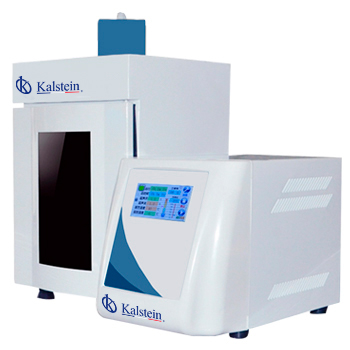
Ultrasonic Homogenizer: Kalstein Brand
As someone who has had the chance to work with a variety of laboratory equipment, I can say that the Ultrasonic Homogenizer by Kalstein truly stands out. It’s not just about having a piece of equipment; it’s about experiencing precision and efficiency in its truest form. Kalstein’s reputation in creating quality laboratory instruments precedes itself, and this homogenizer is no exception. When you dive into the specifics, you’ll quickly realize why it’s a leader in its category.
Kalstein’s Ultrasonic Homogenizers are designed with the end-user in mind, featuring intuitive interfaces and robust construction. Whether you’re dealing with delicate biological samples or more challenging industrial mixtures, this equipment delivers consistent and reliable results every time. Feedback from the community confirms my experiences. Users appreciate how the homogenizer handles a wide range of applications with ease, making it a versatile addition to any lab setting.
Features of the Ultrasonic Homogenizer
When evaluating an Ultrasonic Homogenizer, its features are pivotal in determining its performance. Kalstein’s models come equipped with advanced technology aimed at simplifying the homogenization process. One notable feature is its digital control system, which ensures precise settings and the ability to replicate experiments with high accuracy. The interface is user-friendly, which minimizes training time and maximizes efficiency.
Additionally, the ultrasonic power is customizable, allowing you to tailor the homogenization process based on the sample type. This adaptability is critical in laboratory environments where different protocols require specific conditions. Furthermore, the homogenizer incorporates safety measures such as overload protection, ensuring that both the user and the device are secure during operation.
Different Types or Models of the Ultrasonic Homogenizer
Kalstein offers several models of the Ultrasonic Homogenizer to cater to diverse laboratory requirements. Each model is designed with unique specifications to address a range of demands. From compact options for smaller labs to larger, more powerful units suitable for industrial applications, Kalstein ensures there’s a fit for every purpose.
For instance, some models feature enhanced power outputs and are equipped with more sophisticated systems for handling high-intensity tasks. Others focus on efficiency and energy consumption, providing cost-effective solutions without compromising performance. The diversity in models underscores Kalstein’s commitment to addressing the varying needs of the scientific community.
Why Does the Ultrasonic Homogenizer Cost What It Does?
The pricing of Kalstein’s Ultrasonic Homogenizer reflects the quality and engineering behind its development. When investing in laboratory equipment, cost considerations are crucial, but they must be weighed against the value provided. Kalstein’s units are priced to balance affordability with superior functionality and durability. The upfront cost is often offset by the longevity and reliability of their equipment, reducing the need for frequent replacements and repairs.
Moreover, the high-quality materials used in construction and the incorporation of cutting-edge technology justify the investment. The precision and results accuracy you achieve contribute significantly to research quality and laboratory efficiency, proving that the costs align well with the benefits.
Compare the Ultrasonic Homogenizer with Similar Products
In the world of ultrasonic homogenizers, several brands strive for prominence. While Kalstein leads with its customer-centric designs, it’s enlightening to compare it with brands like BioLogics, Hielscher, and Sonics & Materials. Each of these brands brings something unique to the table.
BioLogics focuses heavily on data logging and advanced software integrations, offering cutting-edge technology for digital applications. In contrast, Hielscher is renowned for its industrial-grade durability, making its homogenizers suitable for rigorous environments. Meanwhile, Sonics & Materials strikes a balance between high power outputs and noise reduction technologies, prioritizing user comfort and environmental considerations.
While each competitor offers standout features, Kalstein harmonizes power, precision, and user-friendly designs, making it a top choice for many laboratory settings.
Pros and Cons of the Ultrasonic Homogenizer
| Pros | Cons |
|---|---|
| Consistent and repeatable results | Initial high investment cost |
| Advanced safety features for user protection | May require significant bench space |
| User-friendly interface reduces the learning curve | Requires regular maintenance |
| Adjustable ultrasonic power for varied applications | Some models may create noise during operation |
| Durable construction ensures a long lifespan | Power consumption can be high for some models |
| Efficient homogenization process saves time | Advanced models might have complex settings |
| Comprehensive support and after-sales service | — |
| Suitable for a wide range of sample types | — |
Benefits of Using Ultrasonic Homogenizers
The advantages of employing ultrasonic homogenizers in the laboratory are numerous. Primarily, they enable superior breakdown of particles, ensuring a uniform and homogenous sample. This is particularly vital in applications involving delicate cell structures or nanoparticles. Using ultrasonic energy, these devices produce fine emulsions and dispersions that traditional methods can’t match.
Moreover, the speed and efficiency that ultrasonic homogenizers provide make them invaluable in time-sensitive processes. By reducing processing time, they enhance productivity and allow researchers to allocate their efforts toward other critical tasks. Ultimately, this balance of time savings and improved outcomes makes these homogenizers a preferred choice for professionals in various scientific fields.
Additional Advantages of Ultrasonic Homogenizers
Beyond the immediate benefits, ultrasonic homogenizers offer several extended advantages. Their versatility in handling multiple sample types makes them indispensable across numerous sectors, from pharmaceuticals to food technology. This adaptability proves cost-effective for labs that need to handle diverse research requirements without investing in multiple devices.
Furthermore, advancements in technology have introduced features that minimize environmental impact. Many models are designed to operate energy-efficiently, reducing both operational costs and carbon footprints. This forward-thinking approach resonates with modern sustainability goals, providing labs an edge in eco-conscious operations.
User Reviews on Ultrasonic Homogenizers
The general consensus among users reflects a high level of satisfaction with Kalstein’s ultrasonic homogenizers. Researchers applaud the reliability and consistency of results, highlighting how the equipment has enhanced their experimental data quality. Users particularly appreciate the ease of use, which is a common theme in user feedback.
There’s also a shared acknowledgement of the company’s customer service excellence. From initial inquiries to post-purchase support, Kalstein ensures their customers feel valued and informed. This commitment to service fosters long-term relationships and customer loyalty.
Frequently Asked Questions
How do ultrasonic homogenizers work?
Ultrasonic homogenizers use ultrasonic waves to create cavitation in a liquid solution, disrupting cells and particles to homogenize and reduce their size.
What applications are suitable for ultrasonic homogenizers?
These devices are ideal for applications in biology, chemistry, pharmaceuticals, and material science, where a fine and even mixture is critical.
Is it easy to maintain an ultrasonic homogenizer?
Yes, these devices are generally easy to maintain with regular cleaning and following the manufacturer’s guidelines for upkeep.
Can I adjust the settings on the homogenizer for different samples?
Absolutely. Kalstein’s homogenizers come with adjustable ultrasonic power settings to suit various sample types and requirements.
Is there support available if I face any issues with the homogenizer?
Kalstein provides comprehensive customer support, ensuring you receive assistance with any questions or concerns you might have.
Are ultrasonic homogenizers energy efficient?
Many modern models are designed with energy efficiency in mind, reducing operational costs and supporting sustainable practices.
Final Recommendations on Ultrasonic Homogenizers
In summary, Kalstein’s Ultrasonic Homogenizer stands out as a versatile, reliable, and user-friendly option suitable for a wide range of laboratory applications. Its comprehensive features, coupled with robust customer support, make it a valuable investment for any lab. If you’re considering optimizing your homogenization processes, I highly recommend exploring what Kalstein has to offer. For further details, you can visit their official page https://kalstein.us/category-product/laboratory-line/homogenizers/ultrasonic-homogenizer/.