
Thermocycler Protocols
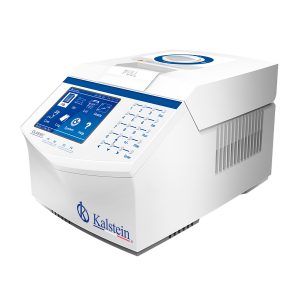
A thermocycler is a laboratory equipment that allows to carry out the polymerase chain reaction (PCR) efficiently and quickly, by automatic and cyclical realization of the changes in temperature required for the amplification of a chain of deoxyribonucleic acid (DNA), from a thermostable enzyme. PCR enables a small amount of DNA molecules to be amplified many times, exponentially.
Thermocycler: real-time PCR
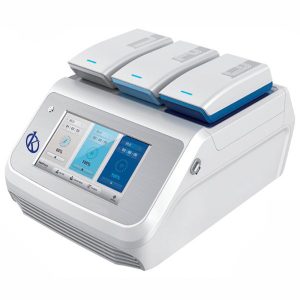
The thermocycler is a device that allows the polymerase chain reaction (PCR) efficiently and quickly, by automatic and cyclical changes of temperature required for the amplification of a chain of deoxyribonucleic acid (DNA), from a thermostable enzyme.
Freeze dryers in pharmaceutical companies

Freeze drying has become a standard practice in the pharmaceutical industry, since the beginning of its first applications around the 40’s. Since then, the freeze dryer has gone from being a simple vacuum drying equipment to become a highly sophisticated system and integrated, which combines a series of processes to guarantee a systematic production according […]
Laboratory lyophilizer: What are the different types that exist?
A lyophilizer is a laboratory equipment that allows to carry out lyophilization, that is to say, it is an instrument that is used to remove moisture from a product by cold drying, thus obtaining a dehydrated product that can be rehydrated when needed, thus fully recovering its properties at the time of use.
Freeze dryers: technique and operations
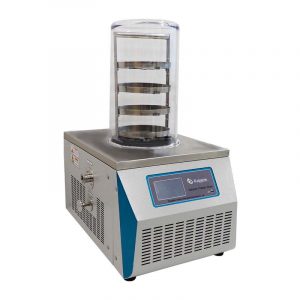
Freeze drying is a process also called freeze drying, and it is carried out in specialized equipment known as a freeze dryer. In this process, the product is frozen, by exposing it to cold air, then passing to a vacuum chamber, in which the humidity is sublimated, eliminating it by crystallization using mechanical vacuum pumps.
Importance of lyophilizers for the production of yogurt

A freeze dryer is a machine in charge of the freeze drying process, also known previously as cryodrying, which is nothing more than the method of cold drying and subsequent sublimation of the ice of a material, which has been previously frozen. This process occurs because the water containing the product passes directly from solid state to vapor state, ignoring the liquid state. Freeze-drying is able to remove 99% of moisture from, for example, a food such as yogurt ferment, coffee, vegetables and fruits, among others, achieving great benefits in relation to the cost of transport, since, being a microbiologically stable product, a cold chain is not necessary and can be transported in greater quantity.
Freeze-dryers to conserve archeological artifacts

Freeze-drying is an equipment that works by making use of drying by vacuum freezing. The freeze-drying process, which is nothing more than an advanced dehydration procedure, removes all traces of water and moisture from the product and sublimes the ice, thanks to the low pressure to which it is subjected. Due to their incredible drying capacity, freeze-dried materials have a higher quality and benefits than dehydrated products through other processes.
What is a freeze dryer?
The lyophilizer is the apparatus used to carry out lyophilization. It consists of the following parts: dry chamber or lyophilization chamber: it is the place where the substance to be lyophilized is placed, condenser with a refrigeration circuit: it communicates with the dry chamber and it is where the vapor that is produced in the sublimation is condensed and finally a vacuum system.
Use of lyophilizers to conserve coffee
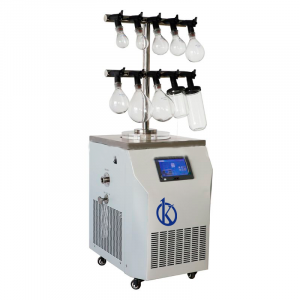
The lyophilizer is a device by which the process of lyophilization is carried out, which is nothing more than the drying of various materials. This equipment allows, through cold drying, the ability to remove moisture from a product or food to obtain it dehydrated, allowing them to continue conserving their properties and nutritional values, in addition to decreasing their volume.
How are Brix degrees measured with the refractometer?
Brix grades are defined as the percentage by weight of a pure sucrose solution, which measures 1 gram of sucrose per 100 grams of sample. The scale is based on the directly proportional relationship between the refractive index at 20°C and the mass percentage of total soluble solids of a pure aqueous solution of sucrose, i.e. 50° Brix equals a sugar content of 50%. This conversion is standardized by the International Commission for Uniform Methods of Sugar Analysis (ICUMSA).